

 By
By A Deep Dive into Global Defence Budgets, Trends & Geopolitical Drivers
1. Introduction
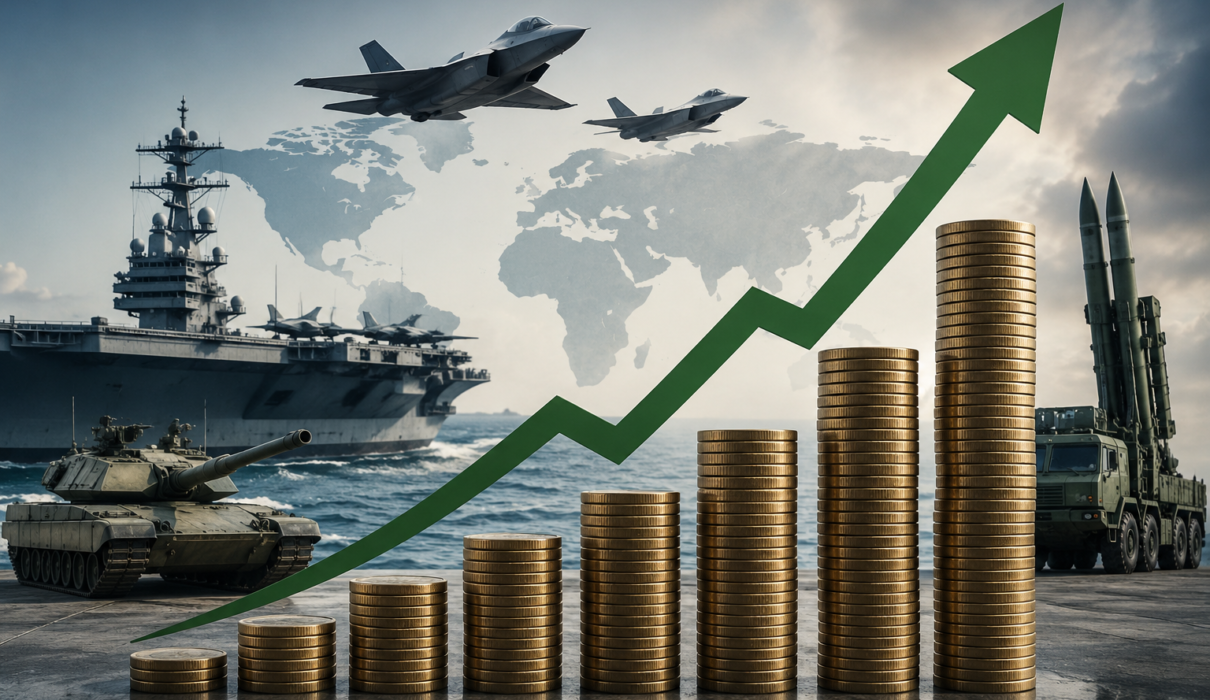
Yes — global military spending is rising, and it is doing so at a pace the world has not witnessed in decades. According to the Stockholm International Peace Research Institute (SIPRI), world military expenditure reached $2,887 billion in 2025, marking the 11th consecutive year of growth. As a share of global GDP, this figure now stands at 2.5% — the highest level since 2009. From the plains of Eastern Europe to the waters of the Indo-Pacific, nations are pouring unprecedented resources into their defence sectors, driven by war, rivalry, and strategic uncertainty.
Key takeaways
- Record-breaking spending for 11 consecutive years
- Europe is the fastest-growing region
- Asia is rearming fast over China tensions
- The top 3 powers (USA , China & Russia) dominate — but allies are catching up
- Spending will keep rising — and it comes at a cost
This article examines who is spending, how much, why military spending is rising globally, and what this relentless arms buildup means for the future of development, diplomacy, and peace.
2. The Big Picture: Key Military Spending Statistics for 2025
The numbers tell a stark story. Global military spending has grown by 41% over the past decade (2016–2025). The top three spenders — the United States, China, and Russia — together accounted for $1,480 billion, or 51% of the entire world total. Yet the most dramatic surges in 2025 came not from these superpowers, but from Europe and Asia.
Europe’s total military spending rose by 14% to $864 billion — the sharpest annual increase since the end of the Cold War. Asia and Oceania followed closely, with spending climbing 8.1% to $681 billion, the largest annual rise in that region since 2009. Even countries traditionally cautious about military investment — Germany, Japan, Spain — dramatically raised their defence budgets in 2025.
Also Read – US Apache Crash Near Hormuz Sparks Concern
3. Global Military Spending Data Table (2025) — Top Countries & Regions
Source: SIPRI Military Expenditure Database, April 2026
| Country / Region | 2025 Military Spending | YoY Change | % of GDP |
| United States | $954 billion | −7.5% | ~3.4% |
| China | $336 billion | +7.4% | ~1.5% |
| Russia | $190 billion | +5.9% | 7.5% |
| Germany | $114 billion | +24% | 2.3% |
| India | $92.1 billion | +~6% | ~2.1% |
| United Kingdom | $89 billion | −4.9% | ~2.2% |
| Ukraine | $84.1 billion | +20% | ~40% |
| Saudi Arabia | $83.2 billion | +1.4% | ~6.5% |
| France | $68 billion | +~5% | ~2.1% |
| Japan | $62.2 billion | +9.7% | 1.4% |
| Spain | $40.2 billion | +50% | 2.0% |
| Europe (total) | $864 billion | +14% | ~2.5% |
| Asia-Oceania (total) | $681 billion | +8.1% | ~2.0% |
| WORLD TOTAL | $2,887 billion | +2.9% | 2.5% |
* YoY = Year-on-Year change in real terms. Ukraine’s GDP share is an estimate based on wartime mobilisation.
4. Why Is Military Spending Rising? The Key Drivers
A. The Russia-Ukraine War
The single biggest catalyst for the global military spending surge has been Russia’s full-scale invasion of Ukraine in February 2022. Now in its fourth year, the conflict has reshaped security calculations across Europe and beyond. Russia’s military spending grew by 5.9% in 2025 to $190 billion — representing 7.5% of its GDP. Ukraine, meanwhile, increased its spending by 20% to $84.1 billion, an extraordinary 40% of its entire GDP — making it the world’s most militarised economy by that measure. SIPRI researchers noted that military expenditure as a share of government spending reached the highest level ever recorded in both Russia and Ukraine.
B. NATO’s Rearmament Push
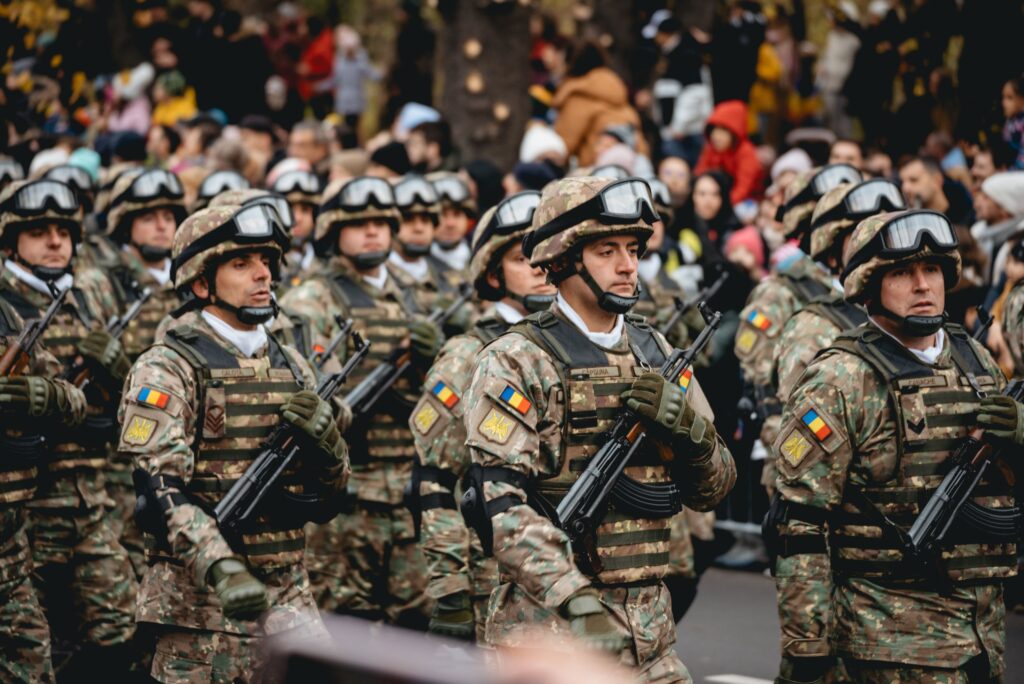
The war in Ukraine galvanised NATO members into action. In June 2025, NATO allies convened at The Hague Summit and committed to an astonishing new defence spending target of 5% of GDP by 2035 — more than doubling the previous 2% benchmark adopted in 2014. In 2025, the 29 European NATO members spent a combined $559 billion, with 22 of them meeting the 2% GDP threshold. Germany crossed this benchmark for the first time since 1990, with spending jumping 24% to $114 billion. Spain surged 50% to $40.2 billion, also exceeding 2% of GDP for the first time since 1994.
C. China’s Military Modernisation and Indo-Pacific Tensions
China, the world’s second-largest military spender, increased its defence budget by 7.4% to an estimated $336 billion. Beijing’s growing assertiveness — including a record 5,709 aircraft incursions near Taiwan in 2025, up from just 380 in 2020 — has pushed neighbouring nations to spend more. Japan’s military expenditure rose 9.7% to $62.2 billion, its highest GDP share since 1958. Taiwan’s spending rose 14% to $18.2 billion. Australia, the Philippines, and South Korea have all significantly expanded their defence postures in response to China’s regional ambitions.
D. Growing US Disengagement and Burden-Sharing Pressure
Paradoxically, while the US remains the world’s largest military spender at $954 billion, its expenditure actually fell 7.5% in 2025 — primarily because no new financial military assistance for Ukraine was approved during the year. However, this decline is widely considered temporary. The US Congress has already approved over $1 trillion in defence spending for 2026, and President Trump’s proposed 2027 budget stands at $1.5 trillion. The Trump administration’s pressure on allies to ‘pay their fair share’ has itself driven much of the European and Asian spending increase.
E. Middle East Instability
Regional tensions in the Middle East continue to fuel military investment. Saudi Arabia remained the region’s largest spender at $83.2 billion, while Israel spent $48.3 billion. Ongoing conflicts and the US-Iran confrontation have kept the region on high military alert, with defence spending across the Middle East remaining elevated well above historical norms.
Also Read – Historic Ceasefire Brings New Hope to Israel-Lebanon
5. Regional Military Spending Breakdown: Where Is the Money Going?
A. Europe: The Fastest-Growing Region
Europe’s rearmament is the defining story of 2025. Spending rose at the fastest pace since 1953. Beyond Germany and Spain, Norway, Poland, Sweden, and Canada all posted spending growth exceeding 20%. For the first time in recorded NATO history, a European ally — Norway — surpassed the United States in defence spending per capita. The European Union has also launched the ReArm Europe Plan/Readiness 2030 initiative, which could mobilise up to €800 billion ($883 billion) in additional defence funding by 2030.
B. Asia and Oceania: Rebalancing Around China
Asia’s combined defence spending reached $573 billion in 2025, growing at 5.7% in real terms. China is both the primary spender and the primary driver of others’ spending. US allies in the region — Japan, Australia, South Korea, and the Philippines — are rapidly expanding their military capabilities, motivated not only by China’s rise but also by growing uncertainty about the reliability of US security guarantees. Australia signed its first warship export project with Japan under the AUKUS framework.
C. Middle East and Africa: Persistent Insecurity
The Middle East remains one of the world’s most heavily militarised regions by GDP share. Ukraine ranks first globally, but Algeria stands at approximately 8.8% of GDP, Israel at 7.8%, and Saudi Arabia at 6.5%. In Africa, military spending trends vary widely, with countries involved in active conflict — such as Sudan and the Democratic Republic of Congo — seeing significant budget pressures on both military and humanitarian spending simultaneously.
6. Future Outlook: Will Military Spending Keep Rising?
All signs point to continued growth. SIPRI researchers have stated explicitly that given the range of current crises and many states’ long-term military spending targets, this growth will probably continue through 2026 and beyond. Global defence spending is projected to surpass $3.6 trillion by 2030, according to multiple analytical estimates. The US is expected to be a major driver once again, with Congress having already approved more than $1 trillion for 2026, and the Trump administration proposing $1.5 trillion for 2027.
Technological change is also reshaping the nature of military spending. For fiscal year 2026, the Pentagon proposed $179 billion for Research, Development, Test and Evaluation — a 27% year-on-year increase — reflecting a strategic shift towards AI, autonomous systems, cybersecurity, drone technology, and next-generation warfare capabilities. NATO’s new 5% target reserves at least 1.5% specifically for digital and cyber infrastructure, signalling that the arms race of the 21st century is as much digital as it is physical.
7. My View: A World Arming Itself Into Danger
There is no denying that rising military spending reflects genuine security threats. Russia’s aggression in Ukraine is real. China’s military pressure on Taiwan is real. The global security environment is, by most measures, more dangerous today than at any time since the Cold War. Governments have a legitimate duty to protect their citizens.
But here is what concerns me deeply: we are watching the world collectively spend nearly $3 trillion every year on instruments of destruction, while billions of people lack access to clean water, quality education, healthcare, and economic opportunity. Global military spending in 2025 was more than 20 times the total global foreign aid budget. As the International Peace Information Service has noted, military production alone accounts for roughly 5.5% of global carbon emissions — a sector that, unlike transport or energy, faces almost no pressure to decarbonise.
I also worry about the logic of escalation. The NATO 5% of GDP target, if implemented, would alone require $474 billion in additional spending annually, generating 132 million additional tonnes of carbon emissions per year according to estimates by Scientists for Global Responsibility. Security and sustainability are not separate conversations — they are deeply intertwined. A world ravaged by climate chaos is also a world of permanent conflict.
8. Conclusion
Understanding the forces behind rising military spending is essential for policymakers, citizens, investors, and anyone who cares about the future of global stability. The world is rearming — the only question is whether it can find a path toward lasting security that does not sacrifice the very development and diplomacy needed to prevent the next war.
What do you think ? Comment below…
