

 By
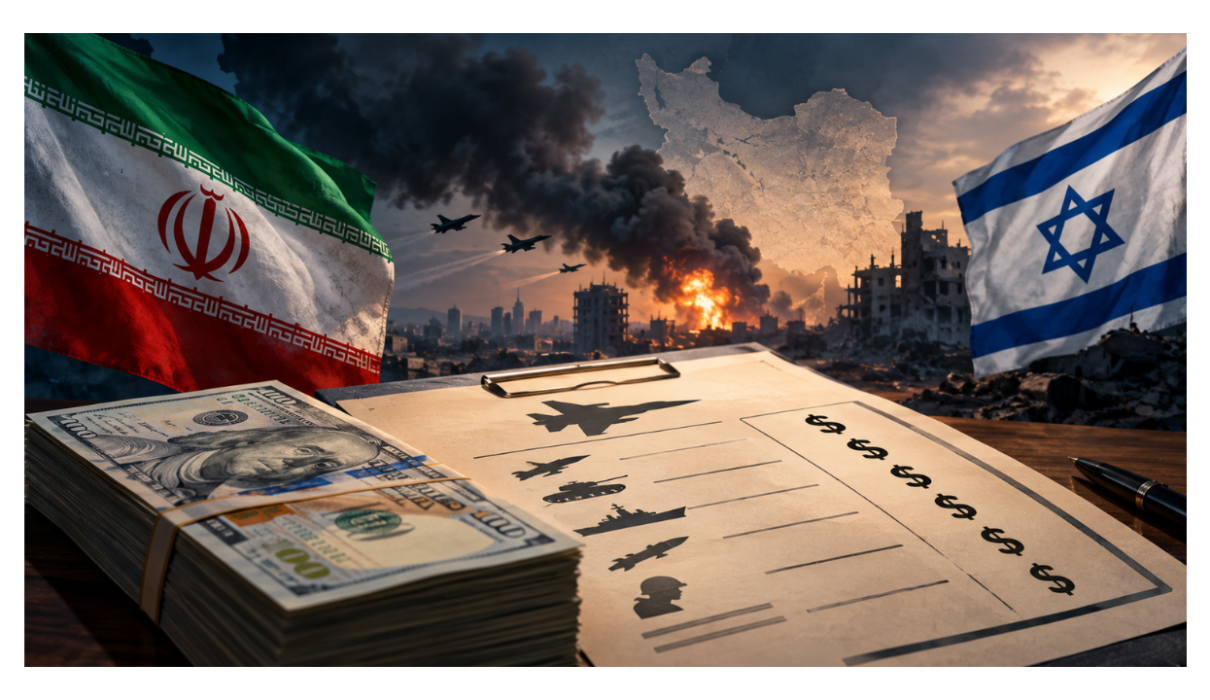
By The Congressional Budget Office’s tally — more than $38 billion spent fighting Iran through August 1, with the meter still running at up to $3 billion a month — is the kind of number that grabs a headline and then gets forgotten by lunchtime. That’s a mistake. Read correctly, the figure is less a price tag than a diagnostic readout of how modern American wars are actually fought, funded, and eventually litigated in Washington.
1. The Cost That Doesn’t Show Up on The Invoice
The dollar figure is the least interesting part of the CBO report. The more consequential finding is that the conflict has burned through roughly half to two-thirds of certain U.S. missile-defense interceptor stocks — weapons that cost anywhere from $4 million (Patriot, SM-6) to $28 million (SM-3) apiece and take years to replace even at surged production rates. That is not an expense; it is a depletion of strategic depth.

A military that has spent down its interceptor inventory defending one theater has, by definition, less to deter the next crisis — whether that’s a contingency involving China, North Korea, or a second flashpoint in the Middle East. Budget analysts call this an “opportunity cost.” Strategists should call it a readiness gap, and it will outlast the war itself by years.
2. Inflation as A Second Front
The CBO also flagged something that turns this from a defense-budget story into a macroeconomic one: the war is expected to push inflation about half a percentage point higher through early 2027, driven mainly by disrupted energy flows through the Strait of Hormuz and shipping friction in the Red Sea. This is the mechanism by which distant wars become kitchen-table issues.

Every American paying more at the pump or the grocery store is, in effect, an unwilling co-financier of the campaign — a transmission channel that tends to matter more to voters than any line item in the defense budget.
Also Read – Strait of Hormuz: The Critical Path to Peace…
3. The Politics Of An Open-Ended Bill
It’s no accident that this estimate landed in the middle of a fight over an $87.6 billion supplemental funding request, or that it surfaced ahead of midterm elections that will decide control of Congress.
War-cost accounting has always doubled as political ammunition — the CBO’s number now sits alongside the Pentagon’s own $37.5 billion estimate as a benchmark lawmakers will invoke on both sides of the aisle: one side arguing the war is unaffordable relative to domestic priorities, the other arguing the cost is the price of resolve. Expect the $38 billion figure to be quoted far more often for its political utility than for its budgetary precision.
4. The Pattern Beneath The Number
None of this is new, but it is a useful reminder of a recurring pattern in American war finance: initial estimates are almost always framed around munitions and operations, while the harder-to-price costs — depleted stockpiles, diplomatic capital, long-term veterans’ care, second-order inflation — surface later and compound. Iraq and Afghanistan followed the same arc, where early cost estimates were revised upward for a decade after the shooting stopped. Seven months in, with no resolution in sight, the honest takeaway isn’t that the war has cost $38 billion. It’s that $38 billion is very likely the floor, not the ceiling — and the bill that matters most, in interceptors and inflation, hasn’t been fully written yet.
What do you think? Comment Below…
