


 By
By Somewhere between the red-carpet photo-ops in Cairo and the standing ovations in Bishkek, Xi Jinping wants you to believe he is untouchable. The world’s most photographed handshake artist spent September 2026 doing what he does best: touring capitals, signing communiqués, and reminding everyone within camera range that China is the “stable alternative” to an unpredictable Washington. It’s a great pitch, and a lot of the world is buying it. There’s just one problem. Back home, the man selling stability has spent the last three years quietly firing, disappearing, or investigating more than a hundred of his own generals.
That is not the profile of a leader casually mopping up corruption. That is the profile of a man who does not fully trust the room he built. This piece is not here to recite the official talking points about Xi Jinping’s “new era” of prosperity and discipline — state media already does that job for free, and does it with a straight face. It is here to ask the more uncomfortable question: is Xi Jinping’s grip on power a sign of strength, or the sound of a strongman slowly running out of people he can rely on?
Key Takeaways…
- Xi Jinping has overseen the purge, dismissal, or disappearance of more than 100 senior PLA officers since 2022 — including two of his own hand-picked Central Military Commission deputies in January 2026.
- China’s headline GDP growth hides a rougher story: roughly ten straight quarters of deflationary pressure, a property sector down 50–80% from its peak, and youth unemployment swinging between 14% and nearly 19% through 2026.
- Xi Jinping spent September 2026 on an unusually dense diplomatic circuit — Kyrgyzstan, Egypt, the SCO summit, the BRICS summit, and a planned state visit to Washington — positioning China as the reliable counterweight to the U.S.
- Unverified health rumors about Xi Jinping spread rapidly after the September 2026 BRICS summit, exposing how little transparency exists around succession in a system with no term limits.
- Some analysts argue the military purges are a necessary, painful cleanup ahead of the PLA’s 2027 combat-readiness deadline, not a symptom of instability — a case this piece takes seriously later on.
1. The Man Who Rewrote China’s Rulebook
To understand why Xi Jinping matters this much, rewind to 2018, when the National People’s Congress obligingly voted to abolish presidential term limits — a formality so smooth it barely dented the news cycle outside China. Since then, Xi Jinping has not just led the Chinese Communist Party; he has become its permanent operating system. “Xi Jinping Thought on Socialism with Chinese Characteristics for a New Era” is written directly into the Party constitution. He chairs the military commission, the economy leading groups, cybersecurity policy, and Taiwan strategy — reportedly everything short of the weather forecast.
Give the man his due. The anti-corruption campaign that began in 2012 really did take down thousands of officials who had turned public office into a personal ATM. Belt and Road projects genuinely reshaped ports, railways, and power grids across Asia and Africa. China’s poverty-alleviation numbers, even discounted for statistical optimism, reflect real change for hundreds of millions of people. None of that is fiction, and pretending otherwise would be lazy.
But somewhere along the way, “fighting corruption” stopped looking like a cleanup operation and started looking like a permanent state of emergency — one in which nobody, not even the people Xi Jinping personally promoted, is safe. That is where the story gets genuinely interesting.
Read This – How China’s Political System Shapes Global Influence
2. The Purge That Ate Itself: Xi Jinping vs. His Own Military
In January 2026, China’s Ministry of National Defense announced that Zhang Youxia — Xi Jinping’s own vice chairman of the Central Military Commission and one of his most trusted military allies — was under investigation for serious disciplinary and legal violations. Alongside him went Liu Zhenli, the PLA’s top operational commander. Between the two of them, these men represented the operational backbone of Xi Jinping’s military command structure. After their removal, the Commission was reportedly down to just two active generals, one of whom is Xi himself.
If that sounds like an isolated incident, it is not. Research compiled by the CSIS China Power Project counts more than 100 senior PLA officers purged, dismissed, or vanished from public view since 2022 — the most sweeping shake-up of the Chinese military in decades. In June 2026 alone, six more generals lost their positions, with PLA Daily front-page commentary declaring 2026 a “year of decisive battle” against graft in the ranks. The purges have hit the Air Force and the Western Theater Command especially hard, areas that had previously seemed relatively insulated from anti-graft probes.
Here is the punchline nobody in Beijing seems eager to advertise: Xi Jinping’s stated goal is a combat-ready PLA by 2027, the Communist Party’s centennial. Gutting the officer corps and replacing experienced commanders with less-tested, more personally loyal successors is an unusual way to hit that deadline. Analysts studying the purges point to a genuine paradox — Xi Jinping can clearly remove anyone he wants, but the fact that he keeps having to do it suggests he still has not fixed the deeper rot in the system he inherited.
Call it thoroughness, call it paranoia, call it a spring cleaning that never actually ends. Whatever label fits, an institution locked in a permanent internal purge is not projecting strength. It is projecting a leader who trusts almost no one enough to let them keep their job.
Also Read – Why Xi Jinping Doesn’t Trust His Own Military
3. The Taiwan Shadow: What a Hollowed-Out Military Means for the Island Question
There is a reason foreign intelligence officials keep circling back to that 2027 date. U.S. officials, including current and former CIA leadership, have pointed to 2027 as the year Xi Jinping has reportedly directed his military to be capable of a Taiwan invasion, should the order ever come. It is not a confirmed invasion date — Beijing has never announced one, and “capable of” is a very different thing from “planning to.” But it does mean the purges above are not simply a domestic personnel headache.
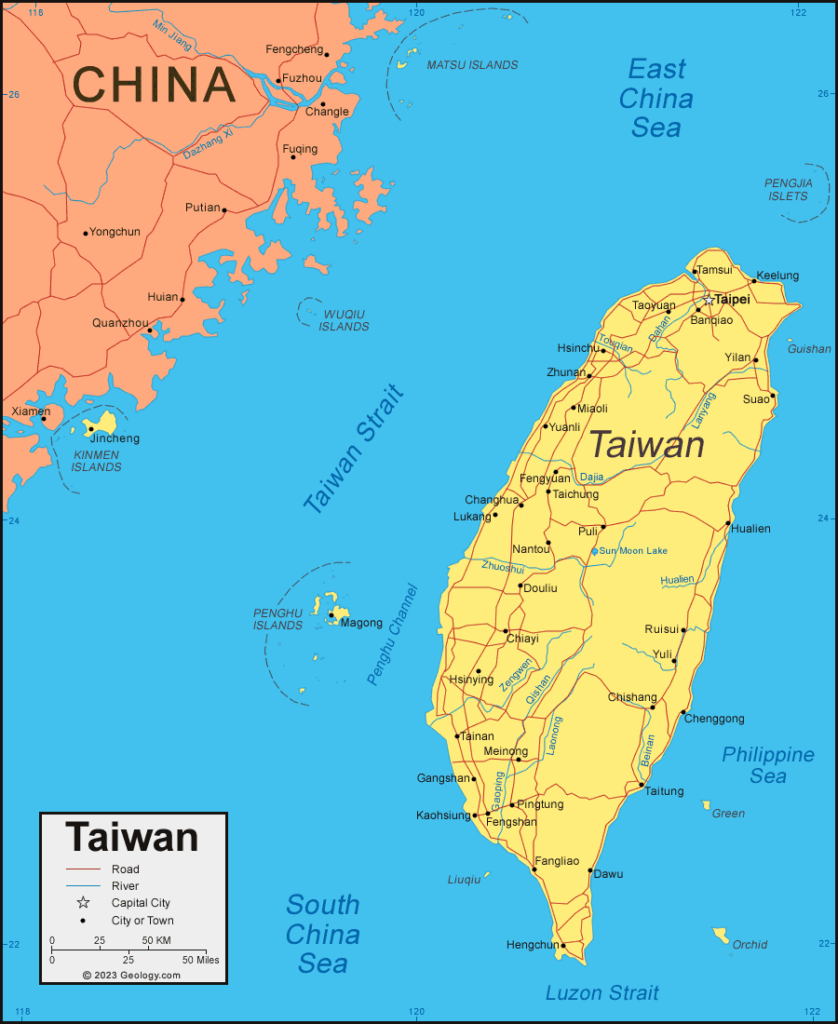
An officer corps stripped of more than 100 senior leaders, including the two men who sat closest to Xi Jinping on military matters, is not the officer corps anyone would choose to execute the most complex amphibious operation in modern military history. Whatever else the purges accomplish, they have almost certainly pushed back the realistic timeline for genuine combat readiness, according to multiple analysts tracking the rapid promotion of less experienced, more personally loyal replacements into senior roles.
That cuts both ways for anyone watching Taiwan nervously. A weaker, less experienced PLA leadership arguably makes near-term military action less likely to succeed, which could be read as mildly reassuring. But it also means Xi Jinping is now surrounded almost exclusively by officers who owe their careers directly to him, with fewer people in the room willing to tell him an operation is not ready. That is not exactly a recipe for cautious decision-making if tensions across the Strait ever come to a head.
4. The Growth Miracle That Isn’t: China’s Economy Under Xi Jinping
Xi Jinping’s economic pitch to the world is simple: China is still growing, still exporting, still winning. And on paper, sure. China’s economy is valued around $20.8 trillion in 2026, and April exports hit a monthly record of roughly $359 billion. Beijing loves those particular numbers, and understandably so — they are the ones that make it onto the evening news.
What does not make it onto the evening news is considerably less flattering. China has now logged roughly ten consecutive quarters of deflationary pressure, the kind of prolonged price stagnation that curdles consumer psychology and keeps households hoarding cash instead of spending it. Property investment, once the primary engine of Chinese growth, has collapsed by an estimated 50 to 80 percent from its peak in some markets. Youth unemployment for workers aged 16 to 24 has swung between roughly 14 and nearly 19 percent throughout 2026, depending on the month and whose methodology you trust — and Beijing changed how it measures that number back in 2023, which tells you something on its own.
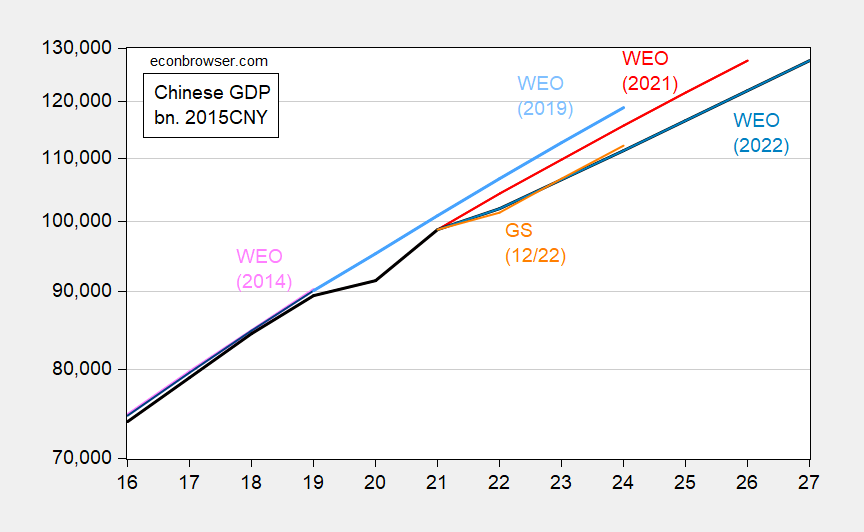
Xi Jinping’s answer has been a familiar playbook: consumption vouchers, accelerated infrastructure spending, targeted credit easing. It has stabilized the headline figures without meaningfully restarting private investment, which remains stuck near multi-decade lows. Chinese households, lacking a real social safety net, keep hoarding an estimated $23 trillion in savings — not because they are culturally frugal, but because they are rationally terrified of what happens if they are not.
None of this means China collapses tomorrow. It means the country Xi Jinping governs is running two different economies at once: a record-breaking export machine on one hand, and a genuine domestic demand crisis on the other. No amount of stage-managed diplomacy changes that math.
5. Xi Jinping’s Global Charm Offensive: Statesman or Salesman?
Say this for Xi Jinping: the man knows how to work a room, and September 2026 proved it. In the span of a few weeks, he attended the Shanghai Cooperation Organisation summit in Bishkek, made state visits to Kyrgyzstan and Egypt, showed up at the BRICS summit in New Delhi to pledge Chinese leadership on AI cooperation among developing nations, and is set to host a high-profile state visit with Donald Trump ahead of China’s turn hosting the APEC summit. Four countries, three state visits, two multilateral summits, and one very photographed handshake with an American president who has spent years threatening tariffs on virtually everything China makes.
The pitch practically writes itself: while Washington lurches from one trade dispute to the next, Xi Jinping wants the Global South — and frankly, anyone else watching — to see China as the grown-up in the room. Stable. Predictable. Reliable. It is a genuinely effective narrative, and it is landing with plenty of countries tired of American unpredictability on trade and tariffs.
But there is something almost theatrical about a leader courting the world as a symbol of stability while, back home, he is simultaneously dismantling his own military leadership and managing a slow-motion economic correction. It is a bit like watching someone confidently host a dinner party while their kitchen quietly burns behind a closed door. Impressive composure. Questionable timing.
6. The Rumor Mill: What the Stroke Story Reveals About Xi Jinping’s China
Here is a small but telling episode. After Xi Jinping’s appearance at the September 12–13 BRICS summit in New Delhi, unverified claims began circulating on social media that he had suffered a stroke during the event.
The claims traced back to a single account with no independent verification, and China’s own itinerary records showed his September 13 departure lined up exactly with what had been announced in advance. By most reasonable readings, the rumor was baseless.
But baseless rumors do not spread in a vacuum. They spread because the system around Xi Jinping offers almost zero transparency about health, succession, or who actually runs things if he is ever incapacitated.
There is no vice-president-in-waiting with real authority, no clearly designated line of succession, and no term limit forcing an orderly transition on a schedule anyone can plan around. When an entire political system is built around one man’s continued presence, even an unverified rumor about that one man becomes a genuine geopolitical event, moving markets and prompting foreign ministries to quietly check their contingency plans.
That is not a criticism unique to Xi Jinping. It is the structural weakness of any system this centralized. But it is worth remembering the next time Beijing wants to sell the world on stability: the stability on offer is entirely contingent on one seventy-something man staying exactly where he is, indefinitely, with no visible backup plan.
7. The Case for Xi Jinping: Steady Hand or Iron Fist?
To be fair to Xi Jinping — and a good argument deserves fair treatment even when you are inclined to roast it — not every analyst reads these purges as panic. Some China-watchers argue the anti-corruption campaign is a genuinely necessary and painful institutional cleanup, not a symptom of instability.
The theory goes like this: after Russia’s 2022 invasion of Ukraine exposed how deep corruption ran inside the PLA Rocket Force and personnel-promotion system, Xi Jinping was reportedly shocked to discover his earlier reforms had not fully stuck. On this reading, the purges are exactly what a serious leader does upon discovering that the military he built is not actually combat-ready: gut it now, rather than discover the rot mid-crisis.
There is also a genuine case for Xi Jinping’s economic stewardship. Supporters point to China’s dominance in EVs, solar panels, and battery manufacturing, its aggressive push into AI leadership through initiatives like the BRICS AI cooperation pledge, and a poverty-reduction record that, whatever its statistical polish, still moved real resources to real people. Xi Jinping’s China is not his alone to run into the ground or lift up — it is the product of decades of state-led development, and plenty of economists argue the current slowdown reflects a structural transition every rapidly industrializing economy eventually faces, rather than personal mismanagement.
And geopolitically, Xi Jinping’s courtship of the Global South is not pure theater. For countries wary of Western conditionality attached to aid and trade, a China that shows up with infrastructure financing and no lectures on governance is a genuinely attractive partner, purges or no purges.
None of that erases the contradictions detailed above. But it is worth holding both truths at once: Xi Jinping is simultaneously the most powerful individual in modern Chinese history and the leader of a system whose stability depends entirely on nobody ever seriously testing it.
8. The Verdict: Where Does Xi Jinping’s China Go From Here?
So — genius or gambler? Probably both, depending on which decade you ask about. Xi Jinping has spent over a decade proving he can concentrate power more completely than any Chinese leader since Mao Zedong.
What he has not proven yet is whether that concentration makes China more resilient or more fragile once the pressure actually hits: a Taiwan crisis, a banking shock, or a succession question nobody in Beijing is currently allowed to ask out loud.
The uncomfortable truth is that nobody will know the real answer until it is tested, and Xi Jinping has spent the better part of three years making absolutely sure it does not get tested from the inside. The generals are purged. The economy is propped up.
The world tour is booked and the itinerary is tight. Whether all of that adds up to an unstoppable China or a very carefully managed illusion is, frankly, one of the defining geopolitical questions of this decade. Anyone who claims total certainty about the answer is selling you something.
What do you think — is Xi Jinping’s China built to last, or running on borrowed time? Drop your take in the comments, and if this kind of unfiltered geopolitical breakdown is your thing, stick around. There is plenty more where this came from.
9. Frequently Asked Questions…
Is Xi Jinping in poor health?
Why is Xi Jinping purging so many PLA generals?
Is China’s economy actually growing under Xi Jinping?
Will Xi Jinping seek a fourth term?
Is China stable under Xi Jinping’s leadership?
What do you think? Comment Below…
