

 By
By Because the modern world was built on water — and most of that water funnels through just a few narrow gaps in the earth.
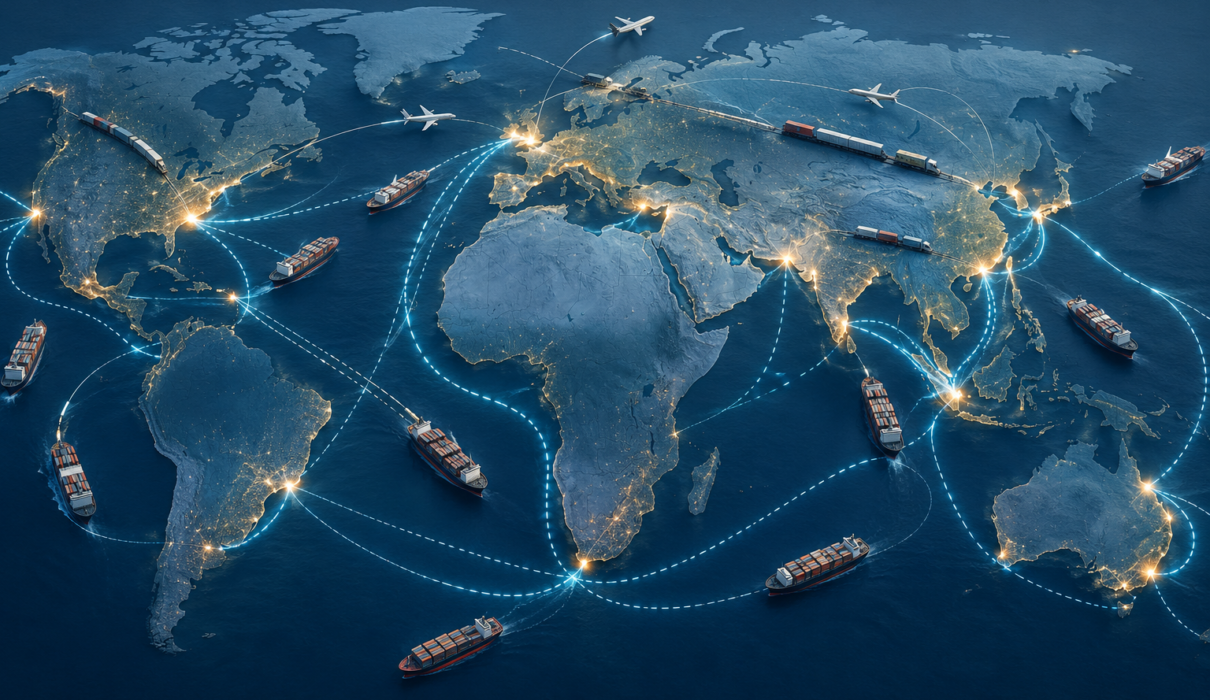
Over 80% of the world’s traded goods and nearly 90% of its energy supplies move by sea. Of that vast ocean-borne flow, the overwhelming majority passes through fewer than ten critical waterways. These are not abstract geopolitical concepts. They are the hidden plumbing of human civilisation — and when they are threatened, the entire world feels it, from oil markets to supermarket shelves.
1. What Is a Strategic Shipping Chokepoint?
A strategic shipping chokepoint is a narrow, geographically confined waterway through which a disproportionately large volume of global maritime trade must pass — with no viable alternative if it is blocked or closed.
Three characteristics define a true chokepoint: geographical constriction forcing ships into a narrow corridor, extreme traffic concentration with no realistic alternative, and systemic global impact if closed. By these criteria, the world has approximately nine to twelve genuine strategic chokepoints.
| Metric | Volume |
|---|---|
| Global seaborne oil trade | ~61 million barrels/day |
| Share passing through chokepoints | Over 63% |
| Global trade by sea (value) | ~$20 trillion annually |
| Global trade by sea (volume) | ~90% of all world trade |
Also Read – Is Crude Oil Still Important In The Modern World?
2. The World’s 10 Strategic Chokepoints at a Glance
| # | Chokepoint | Width (narrowest) | Daily Oil (mbpd) | Annual Trade Value | % Global Trade | Risk Level |
|---|---|---|---|---|---|---|
| 1 | Strait of Hormuz | 33 km | 21 | ~$1.4 trillion | 20–21% | 🔴 CRITICAL |
| 2 | Strait of Malacca | 2.8 km | 16 | ~$5.3 trillion | 25% | 🔴 CRITICAL |
| 3 | Suez Canal | 205 m | 9–10 | ~$1 trillion | 12–15% | 🔴 CRITICAL |
| 4 | Bab-el-Mandeb | 29 km | 6.2 | ~$700 billion | 10% | 🔴 CRITICAL |
| 5 | Panama Canal | 82 km (length) | — | ~$270 billion | 5% | 🟠 HIGH |
| 6 | Turkish Straits | 700 m (Bosphorus) | 3 | ~$600 billion | 3–5% | 🟠 HIGH |
| 7 | Strait of Gibraltar | 14 km | Varies | ~$500 billion | 5–10% | 🟡 MOD-HIGH |
| 8 | Cape of Good Hope | Open ocean | — | Bypass route | Bypass | 🟢 LOW |
| 9 | Dover Strait | 33 km | — | ~$300 billion | 4–5% | 🟡 MODERATE |
| 10 | Lombok & Sunda Straits | 24–40 km | 3–4 (VLCC) | Contingency | Backup | 🟡 MODERATE |
3. The Four Most Critical Chokepoints
A . The Strait of Hormuz
It is the world’s oil jugular. Wedged between Iran and Oman, it carries 21 million barrels of oil per day — roughly 20% of global supply — and 30% of all LNG trade. The Persian Gulf nations collectively hold 48% of the world’s proven oil reserves, and every barrel exits through this single gate. A 30-day closure would trigger an estimated $163 billion per week in global economic losses. Iran holds the key and has repeatedly threatened to use it.
B. The Strait of Malacca
It is Asia’s economic lifeline — just 2.8 kilometres wide at its narrowest point, yet carrying $5.3 trillion in annual trade and 25% of global commerce. China imports 80% of its crude oil through it. Japan and South Korea import virtually all of their energy through it. Chinese military planners call their dependence on this waterway the “Malacca Dilemma” — an existential vulnerability that has driven decades of strategic infrastructure investment across the Indian Ocean.
C. The Suez Canal
It is the only man-made chokepoint on the list — a 193-kilometre artificial waterway that saves ships 7,000 to 10,000 kilometres per voyage between Europe and Asia. In 2021, the Ever Given ran aground for six days and blocked $9.6 billion in trade per day. In 2024, Houthi attacks on the Red Sea caused a 42% drop in canal traffic, freight rates surged over 200%, and war-risk insurance premiums leapt by more than 500%.
D. The Bab-el-Mandeb
In Arabic for “Gate of Tears” — sits at the southern entrance to the Red Sea. Just 29 kilometres wide, it is the lock on the door the Suez Canal opens. In 2024 it became the most actively dangerous shipping lane on earth, as Houthi forces deployed anti-ship missiles, cruise missiles, and drone swarms to effectively shut it down for months. Over 100 vessels were attacked. Two ships were sunk.
Also Read – Gold and Geopolitics: The Hidden Power Behind Global Conflicts
4. Who Controls These Chokepoints?
A. The United States — The Receding Guarantor
For seventy years, the U.S. Navy has been the invisible guarantor of open sea lanes globally, operating through four naval commands covering every major chokepoint:
| U.S. Naval Command | Key Chokepoints Covered |
|---|---|
| 5th Fleet (Bahrain) | Hormuz, Bab-el-Mandeb |
| 6th Fleet (Naples) | Gibraltar, Suez, Bosphorus |
| 7th Fleet (Yokosuka) | Malacca, Lombok, Sunda |
| 4th Fleet (Mayport) | Panama Canal, Cape of Good Hope |
But the 2024 Red Sea crisis exposed a fundamental crack: defending a chokepoint and reopening one are not the same thing. American warships intercepted over 100 Houthi missiles and drones — yet commercial shipping lines still refused to return. Insurance economics, not naval firepower, determined the outcome.
B. China — The String of Pearls
China has responded to the Malacca Dilemma with the most ambitious strategic infrastructure programme of the twenty-first century — the “String of Pearls” — building ports and naval facilities from Gwadar in Pakistan to Djibouti on the Horn of Africa, forming a chain of strategic footholds across the Indian Ocean. Its Belt and Road Initiative adds land-based alternatives through pipelines and rail corridors to reduce dependence on maritime chokepoints. None yet carries the volume of a supertanker, but collectively they are reshaping the geopolitics of an entire ocean.
C. Iran — The Asymmetric Master
Iran has built its entire strategic deterrence around one insight: threatening chokepoints generates leverage far beyond what conventional military power provides. Its arsenal includes thousands of naval mines, anti-ship ballistic missiles with 300+ km range, fast attack boat swarms, and a proxy network — the Houthis, Hezbollah, Kata’ib Hezbollah — capable of threatening multiple chokepoints simultaneously without a single Iranian missile being fired from Iranian territory.
D. Russia — The Black Sea Gambit
Russia’s geographical reality — the world’s largest nation by land area, yet bottled into limited warm-water sea access — has driven its foreign policy for centuries. Its only southern naval outlet, the Black Sea, exits through the Turkish Straits controlled by NATO member Turkey. When Turkey invoked the Montreux Convention in 2022 and closed the Bosphorus to warships of belligerent nations, Russia could not reinforce its Black Sea Fleet — which Ukraine subsequently devastated using Neptune missiles and naval drones.
What Does a Blocked Chokepoint Actually Cost?
The economic consequences of chokepoint disruption cascade from narrow waterways into every sector of the global economy:
| Event | Chokepoint | Economic Impact |
|---|---|---|
| Tanker War (1984–88) | Hormuz | Oil prices +30–40% over 4 years |
| First Gulf War (1990–91) | Hormuz | Oil prices +100% in 3 months |
| Ever Given grounding (2021) | Suez | $9.6 billion/day blocked; $54 billion total |
| Black Sea grain disruption (2022) | Bosphorus | Wheat prices +60%; 47 million more people facing hunger |
| Panama drought (2023) | Panama Canal | Traffic reduced 42%; slots sold for $4 million each |
| Red Sea crisis (2023–24) | Bab-el-Mandeb | Freight rates +300%; insurance premiums +500% |
The 2024 Red Sea crisis alone generated an estimated $80–100 billion in global economic costs — including $60–80 billion in additional shipping costs, $6–7 billion in lost Egyptian canal revenues, and $10–15 billion in European manufacturing disruptions. Tesla suspended production at its Berlin gigafactory. Volvo halted its Belgian plant. Freight rates on the Asia-to-Europe route surged from $1,500 per container to over $8,000.
A full Hormuz closure of 90 days would be far more severe. Oxford Institute for Energy Studies modelling suggests oil could reach $200–250 per barrel — more than double any price ever recorded — with a cascading CPI impact of 3–6 percentage points across oil-importing nations globally.
What Does a Chokepoint Crisis Actually Mean for You?
When a narrow strait closes on the other side of the world, your daily life changes — whether you know it or not.
💰 You Pay More at the Pump
Every chokepoint threat adds an instant risk premium to global oil prices. When Iran threatens Hormuz, petrol prices rise within days — not weeks. You feel it every time you fill your tank.
🛒 Your Grocery Bill Rises
Food travels by sea. Grain, cooking oil, and fertiliser all transit critical chokepoints. When the Black Sea corridor was disrupted in 2022, wheat prices surged 60% — and 47 million additional people faced hunger globally.
📦 Your Online Orders Are Delayed
The t-shirt, phone, or appliance you ordered online likely travelled through the Strait of Malacca or Suez Canal. During the 2024 Red Sea crisis, delivery windows stretched by 10–14 extra days as ships rerouted 9,000 kilometres around Africa.
🏭 Your Job Could Be at Risk
Tesla halted its Berlin factory. Volvo shut its Belgian plant. Both cited Red Sea disruption cutting off component supplies. When chokepoints close, factories stop — and workers go home.
💡 Your Energy Bills Spike
LNG tankers carrying heating gas to Europe reroute around Africa when the Red Sea is unsafe — adding weeks to delivery and driving up energy prices across entire continents.
📱 Your Internet Slows
Three undersea cables were damaged in the Red Sea in 2024, disrupting 25% of data traffic between Asia, Europe and Africa. Your streaming, banking and communication all run through the same geographical narrows as oil tankers.
🏦 Your Savings Lose Value
Oil shocks drive inflation. Inflation forces interest rate rises. Rate rises reduce the value of your savings, increase your mortgage payments and slow economic growth.
The world’s chokepoints are not a geography lesson. They are your electricity bill, your food prices, your job security — and your cost of living.
Also Read – G7: Bold Strategies Shaping World Order
Future Outlook
The chokepoints oFf 2050 will not be identical to those of 2024. Four major forces are redrawing the map:
The Arctic Opening is the most geographically dramatic shift. Arctic sea ice has declined 13% per decade since 1979. The Northern Sea Route along Russia’s Arctic coast saves 8,000 kilometres compared to Suez — but puts Russia in the gatekeeper role for a new critical corridor. NSR cargo volume has grown from 3.9 million tonnes in 2015 to a projected 80–100 million tonnes by 2030.
The Energy Transition is slowly dissolving the oil chokepoints’ leverage. The IEA projects global oil demand falling 76% by 2050 under its Net Zero scenario — reducing Hormuz from an existential lever to a significant but manageable risk. But the transition creates new chokepoint vulnerabilities in critical mineral supply chains. China’s dominance in critical mineral processing represents a chokepoint of a new kind — not a geographical narrows in the ocean, but a technological narrows in the supply chains of the future economy.
Undersea Cable Chokepoints represent the digital economy’s hidden vulnerability. Approximately 550 undersea cable systems carry 99% of international data traffic. They concentrate at the same geographical pinch points as shipping lanes — the Red Sea, the Malacca Strait, the Dover Strait. In February 2024, three cables were damaged in the Red Sea, disrupting 25% of data traffic between Asia, Europe, and East Africa.
New Strategic Chokepoints are emerging that the world is not yet watching closely enough — the Taiwan Strait, through which half of global container traffic passes and which sits adjacent to Taiwan’s semiconductor industry producing 92% of the world’s most advanced chips; the Mozambique Channel, whose traffic surged during the 2024 Red Sea crisis and whose adjacent coastline hosts an active Islamist insurgency; and the GIUK Gap between Greenland, Iceland, and the UK, a Cold War military chokepoint that is becoming critical again as the Arctic opens and Russian submarines resume Atlantic patrols.
Also Read – Trade Wars Made Simple: A Beginner’s Guide
FAQs
What is the most important shipping chokepoint in the world?
What would happen if the Strait of Hormuz was blocked?
How many ships pass through the Strait of Malacca per day?
Why is the Suez Canal so important to global trade?
Which country controls the most shipping chokepoints?
Can ships bypass the Strait of Hormuz?
How did the 2024 Red Sea crisis affect global shipping?
Conclusion
The world’s economy depends far more on a handful of narrow maritime passages than most people realize. Straits such as the Strait of Hormuz, Strait of Malacca, Suez Canal, Bab el-Mandeb, and the Turkish Straits act as vital arteries connecting producers, manufacturers, and consumers across continents. When any one of these chokepoints is disrupted by conflict, piracy, accidents, or geopolitical tensions, the effects spread rapidly through global supply chains. Energy prices rise, shipping costs increase, delivery schedules are delayed, and inflationary pressures ripple across economies.
In my view, the greatest lesson is that globalization has created remarkable efficiency but also significant vulnerability. While governments and shipping companies are investing in alternative routes, larger vessels, strategic reserves, and supply chain diversification, geography cannot be changed. These narrow waterways will continue to influence international trade, energy security, and military strategy for decades to come.
As global competition intensifies and climate change opens new shipping possibilities while creating fresh risks, protecting these maritime chokepoints will become even more important. The future of global commerce depends not only on technological innovation but also on maintaining secure, open, and reliable sea lanes. Understanding these strategic bottlenecks helps explain why events occurring in a single narrow strait can affect fuel prices, supermarket shelves, and economic stability worldwide.
What do you think about these narrow passages ? comment below……..
