

 By
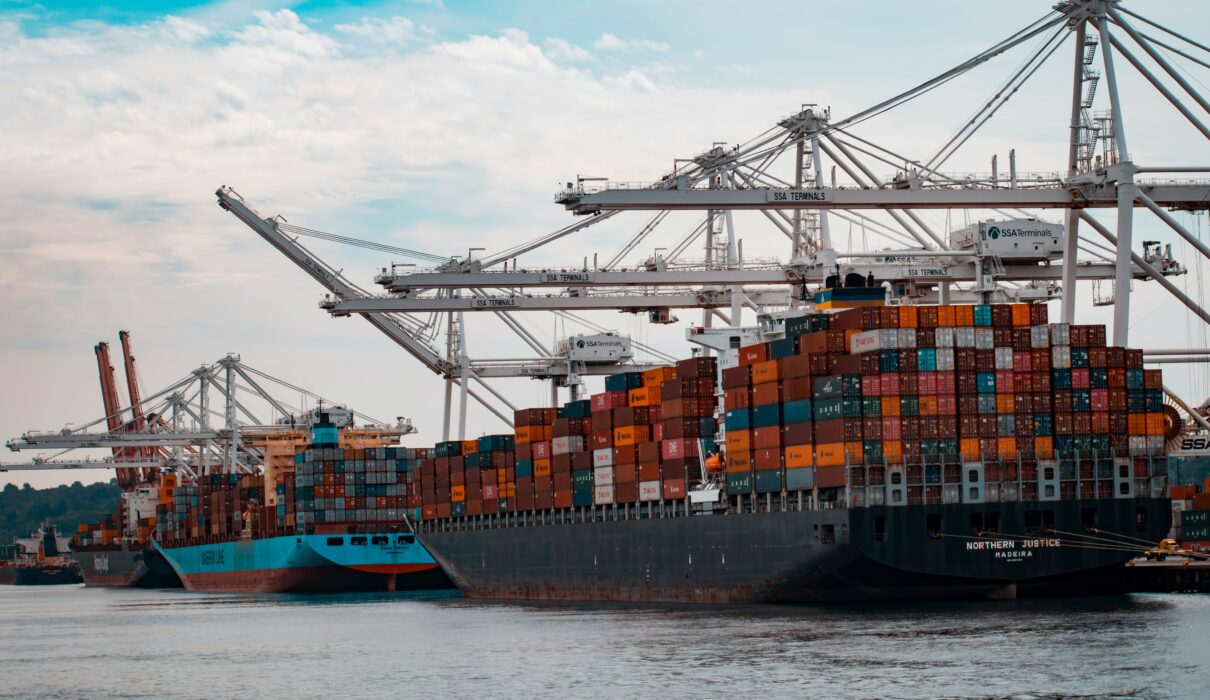
By Pick up your phone for a second. Before it ever reached your hand, it had already lived a bigger life than most people ever will. The lithium in its battery may have come from a mine in Australia. The chip was probably designed in the United States and etched in a factory in Taiwan. The glass was likely melted in Kentucky, the screen assembled in Vietnam, and the whole thing packed into a box and flown across oceans before landing on a shelf near you.
That invisible journey, the one you never see but rely on every single day, is called a global supply chains. It is the quiet machinery behind almost everything you own, eat, or use. And once you understand how it works, you will never look at a simple grocery run the same way again.
This guide breaks down what a global supply chain actually is, how it moves, the different types businesses use, and the questions people ask about it most often online.
1. What is a global supply chain?
A. A simple definition
A global supply chain is the entire network of people, companies, and processes that work together to turn raw materials into a finished product and deliver it to a customer, often across several countries.
Think of it as a relay race. Each runner (supplier, factory, shipper, warehouse, retailer) hands off the baton to the next one. If even one runner stumbles, the whole race slows down.
B. The main players involved
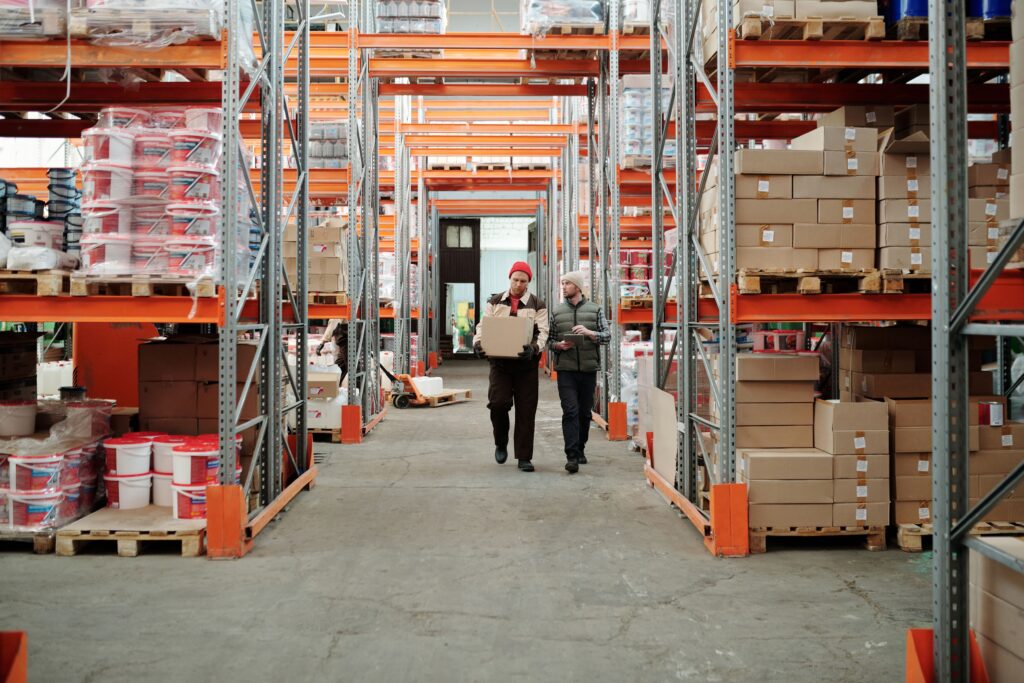
A typical global supply chain includes:
- Suppliers who provide raw materials or components
- Manufacturers who turn those materials into products
- Logistics providers who move goods by air, sea, rail, or road
- Warehouses and distribution centers that store and sort inventory
- Retailers who sell the final product
- Customers who create the demand that starts the whole cycle again
Every one of these players depends on the others. That interdependence is what makes a global supply chain powerful, and also fragile.
Also Read – Is Cryptocurrency the Ultimate Power Play in Geopolitics?
2. How does a global supply chain actually work?
A global supply chain is not one giant leap from factory to your doorstep. It moves in stages, and each stage adds time, cost, and value to the product.
Step 1: sourcing raw materials
Everything starts with raw materials. Cotton for a t-shirt, cobalt for a battery, wheat for bread. Companies source these materials from countries where they are available at the right cost and quality.
Step 2: manufacturing and production
Once materials arrive, factories turn them into usable parts or finished goods. A single product may pass through several factories in different countries before it is complete.
Step 3: warehousing and inventory management
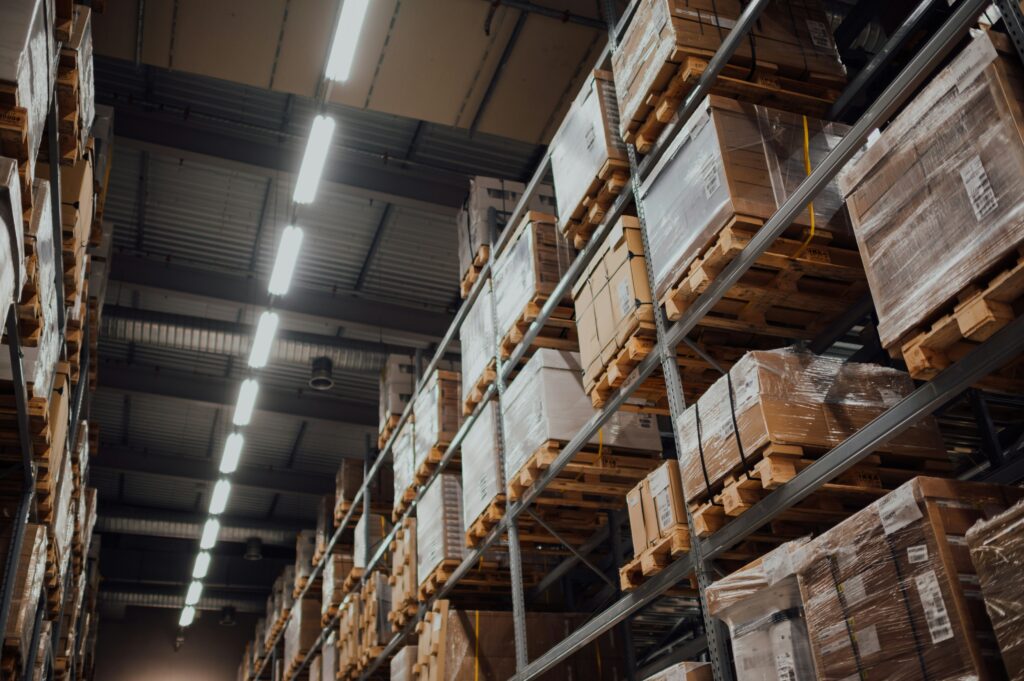
Finished goods rarely go straight to a customer. They sit in warehouses first, where businesses manage inventory levels so they have enough stock without overspending on storage.
Step 4: transportation and logistics
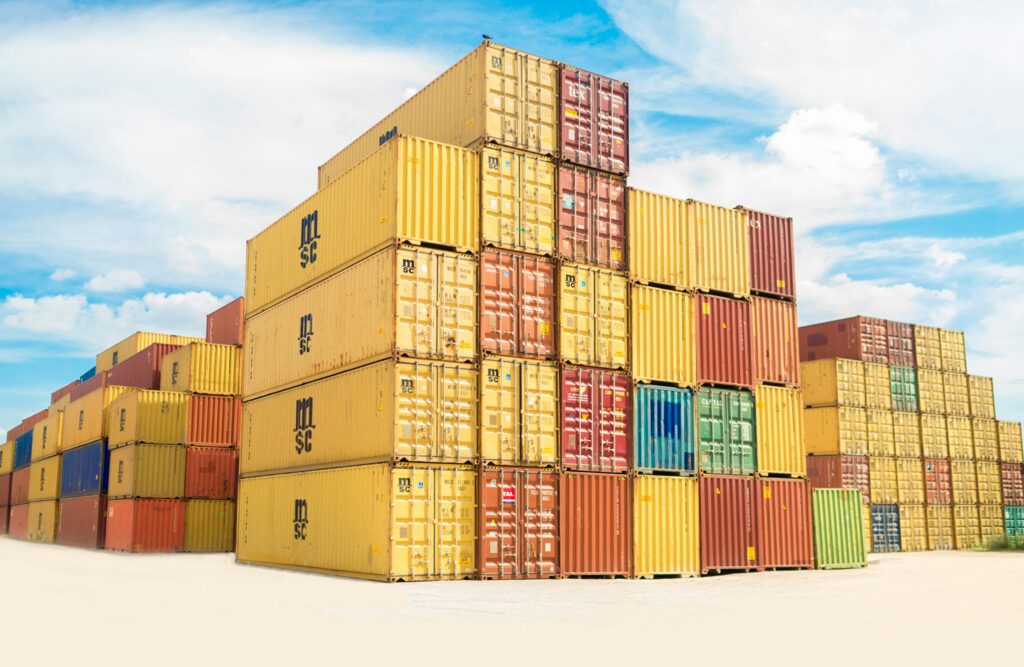
This is the physical movement of goods, by cargo ship, airplane, train, or truck. Transportation is often the slowest and most expensive part of a global supply chain, which is why companies plan routes carefully.
Step 5: distribution and retail
From ports and warehouses, products move to regional distribution centers and then to stores or fulfillment centers, ready for the final delivery to a customer.
Step 6: the customer and reverse logistics
The chain does not end at purchase. Returns, repairs, and recycling create what is known as reverse logistics, sending products backward through the same network.
Also Read – Gold and Geopolitics: The Hidden Power Behind Global Conflicts
3. Types of global supply chains
Not every business runs its supply chain the same way. The right type depends on the product, the market, and how fast things need to move.
A. Traditional or linear supply chain
This is the classic model: raw materials to manufacturer to distributor to retailer to customer, moving in a straight, predictable line. It works well for stable, low-change industries like basic household goods.
B. Agile supply chain
An agile supply chain is built to react quickly to sudden changes in demand or supply. Companies in fast-moving industries, like electronics, use this model to avoid being caught off guard.
C. Lean supply chain
A lean supply chain focuses on cutting waste and cost at every step. It works best when demand is predictable and steady, since there is little room for surprises.
D. Fast fashion supply chain
This model is built purely for speed. Clothing brands using this type can design, produce, and ship a new trend to stores in a matter of weeks instead of months.
E. Digital or e-commerce supply chain
Built around online orders, this type relies heavily on data, automated warehouses, and last-mile delivery networks to get a product from a click to a doorstep as fast as possible.
F. Hybrid supply chain
Many large companies blend two or more of these models, using lean methods for everyday products and agile methods for new or unpredictable ones.
4. A real-world example: from cotton field to your closet
To see a global supply chain in motion, follow a plain cotton t-shirt.
It begins on a farm in India or the United States, where cotton is harvested and pressed into bales. Those bales travel to a spinning mill, often in a different country, where the raw cotton becomes yarn.
The yarn is shipped again, this time to a textile mill in a place like Bangladesh or Vietnam, where it is woven into fabric and dyed. From there, it moves to a garment factory, where workers cut and sew the fabric into the actual t-shirt.
Once finished, the shirts are folded, packed into containers, and loaded onto a cargo ship bound for a port near you. From the port, trucks carry them to a distribution center, then to a retail store or fulfillment warehouse.
By the time you buy that five-dollar t-shirt, it may have crossed three or four countries and passed through the hands of dozens of workers. That is the quiet complexity behind something most people barely think twice about.
5. Benefits of a well-managed global supply chain
A strong global supply chain does more than move boxes. It creates real advantages for businesses and customers alike.
- Lower costs, since companies can source materials and labor where they are most affordable
- Greater product variety, because businesses can pull ingredients and components from anywhere in the world
- Faster access to new markets, allowing companies to grow beyond their home country
- Stronger competitive pricing, which often gets passed down to the customer
- Access to specialized skills, such as advanced manufacturing techniques only available in certain regions
Of course, these benefits only show up when the chain is managed well. A poorly managed one can just as easily create delays, waste, and unhappy customers.
6. Why global supply chains matter to everyday life
It is easy to think of supply chains as a business topic, something for executives in boardrooms. But they shape daily life far more directly than most people realize.
When a global supply chain runs smoothly, store shelves stay full and prices stay stable. When it breaks, even briefly, the effects show up fast: empty shelves, delayed deliveries, and sudden price jumps on things as ordinary as eggs or car parts.
A global supply chain is, in many ways, an invisible promise. It promises that the things you need will be there when you need them.
7. Common challenges facing global supply chains today
A. Geopolitical tension and tariffs
Trade disputes, sanctions, and shifting tariffs can suddenly change the cost or feasibility of sourcing from a particular country, forcing businesses to rethink supplier relationships almost overnight.
B. Climate change and natural disasters
A single flood, hurricane, or drought can shut down a port or factory for weeks. Because global supply chains are so interconnected, a disruption in one region often ripples out to the entire world.
C. Demand forecasting errors
Predicting exactly how much of a product people will want is part science, part guesswork. Overestimate demand, and warehouses fill with unsold stock. Underestimate it, and shelves run empty.
D. Cybersecurity risks
Modern supply chains run on data. A cyberattack on a shipping company, supplier, or logistics platform can freeze operations across multiple countries at once.
E. Labor and ethical sourcing issues
With so many countries and factories involved, monitoring fair wages and safe working conditions becomes harder. Consumers increasingly expect brands to prove their global supply chain is ethical, not just efficient.
8. How technology is reshaping global supply chains
A. Artificial intelligence and predictive analytics
AI tools now help companies forecast demand, spot potential delays before they happen, and choose the most efficient shipping routes in real time.
B. Blockchain for transparency
Blockchain technology allows companies to track a product’s journey step by step, making it easier to verify where materials came from and confirm ethical sourcing.
C. Automation and robotics
Warehouses increasingly rely on robots to sort, pack, and move goods, cutting down on human error and speeding up fulfillment times.
D. Internet of things sensors
Smart sensors attached to shipping containers can track temperature, location, and handling conditions in real time, which is especially useful for fragile or perishable goods.
9. The future of global supply chains
Global supply chains are shifting toward being shorter, smarter, and more resilient rather than purely cheap.
Many companies are now practicing “nearshoring,” moving production closer to their end customers to cut down on shipping time and political risk. Others are diversifying suppliers across multiple countries instead of relying on just one, a lesson learned hard from recent years of disruption.
At the same time, sustainability is becoming less of a nice-to-have and more of a requirement, with customers and regulators alike pushing for lower emissions and more transparent sourcing. The global supply chain of the next decade will likely look less like a single long line and more like a flexible web, able to bend without breaking.
10. My view
If there is one factor that writing often worldwide distribution chains has taught me, it is miles that we generally tend to make the simplest of word structures once we break down. Years after espresso showed up, the phone was connected and given, the shelves were full, none of us imagine doubling about the quiet dance lesson in his backyard. Even the average person needed disruptions, shortages, delayed ships, and empty roads to study the phrase “deliver the chain.” That says something about how well these websites work, and how invisible the right setup is.
What drives me most, going through this topic, is how everything human really belongs in the logistical vocabulary. We often communicate “flows,” objects, records, and money, exchanging through a sequence, yet each of these flows exists because real human beings somewhere made a decision. A farmer decided to plant cotton this season. A production unit manager decided to run the night shift to meet the deadline. A captain decided to divert around the storm. The system feels mechanical from afar, but miles closer to it is just a bunch of character decision calls, stacked on top of each other, trying to get something small and ordinary in your arms on time.
I also think we underestimate how this system drives a lot of trust. A merchant trusts the manufacturer to pay on schedule. A retailer trusts the shipper to deliver on time. The customer is confident that the product on the shelf is safe and authentic. None of that consideration is guaranteed, it has to be created and maintained, agreed upon by contract, set dates using relationships, across borders and languages and time zones. When humans talk about supply chain “resilience,” what they are absolutely often describing is the flow of those relationships, not just the strength of the infrastructure .
Where I put more creativity is across the shift towards transparency. Tools like blockchain and IoT tracking aren’t just efficiency upgrades, they can be accountability improvements. The first-time visitor may fairly ask, “Where exactly did this come from” and expect a genuine solution as opposed to a shrug. There are more things than it looks on paper, because it starts to close the emotional distance between the product and the people who made it viable.
If I needed to set readers off with one concept, it would be this: a global distribution chain isn’t just infrastructure, it’s miles of dating between strangers who are unlikely to ever meet. The farmer never meets the customer. Employees of manufacturing plants do not meet with shops in any way. But they are all, in very real experience, collaborators. We personally think every simple, unforgettable thing is proof that international cooperation is not only wise, it happens steadily, quietly, and yes, more regularly than it fails. It’s worth remembering the next time a package deal shows up at the door without another concept.
Read – Global Supply Chain: What It Is, Importance, and Challenges
11. Frequently asked questions…
What is a global supply chain in simple words?
What is the difference between supply chain and logistics?
What are the main stages of a global supply chain?
Why do global supply chains break down?
What is a real example of a global supply chain?
Is Amazon considered a global supply chain?
What jobs exist in global supply chain management?
How can a small business build a global supply chain?
What are the three main flows in a global supply chain?
How does globalization affect the supply chain?
What is supply chain resilience?
Why is nearshoring becoming more popular?
12. Conclusion
The next time a package lands on your doorstep, or you pick up something as small as a jar of coffee, take a second to think about everything that had to go right for it to reach you. Farmers, factory workers, ship crews, truck drivers, and warehouse staff, spread across different time zones and cultures, all played a quiet part in that one small moment.
A global supply chain is not just a business term. It is a kind of shared human effort, one that connects strangers across the world to make ordinary life feel effortless. Understanding how it works does not just make you a smarter consumer or a sharper business mind. It gives you a little more appreciation for the invisible hands behind the things you often take for granted.
Please comment below….
