

 By
By The Kennedy Center has been a battlefield for an ongoing clash between President Trump’s board and a federal court since late 2025. The board has voted repeatedly to put Trump’s name on the building. A judge has found those moves illegal. And the center has repeatedly signaled its intention to put the name back on anyway — transforming a single institution into an example of how control of a board can serve as a lever of political power.
The Timeline, Briefly
- Late 2025: Trump, along with his personal appointees, replaces the former leadership and board as president of the Kennedy Center.
- December 2025:The new administration votes to call out Trump’s mask, rebranding it the “Donald J. Trump and John F. Kennedy Memorial for the Performing Arts.”
- Spring 2026: A federal judge rules that the lightest convention center has the right to change its name, forcing the government to drop Trump’s name from the building and website Workers crush the mask overnight with a tarp to prevent the public from seeing the letters come down.
- August 2026: The board votes again — this time to inscribe “Restored and Renovated by President Donald J. Trump” beneath the Kennedy Center sign and to rename the surrounding site “President Donald J. Trump Plaza,” with the change expected to take effect in early September.
Also Read – Freefall: Trump’s State-by-State Approval Numbers Reveal a Presidency Losing Its Grip
Why This Is About More Than a Name
Signage at theater venues is, on the face of it, a minor administrative issue. What makes the Kennedy-Center controversy huge is what it shows about how institutional manipulation translates and influences it: whoever chairs the committee decides programming, staffing, and now, apparently, whose calls go to the building — even after the courtroom says otherwise.
The case for the naming, since the administration and the White House framed it, hinges on the pipeline: Trump-appointed stewards are clogging hundreds of thousands of dollars in fundraising and a broader recovery effort, arguing that the Kennedy Center deteriorates financially before a new administration takes over.
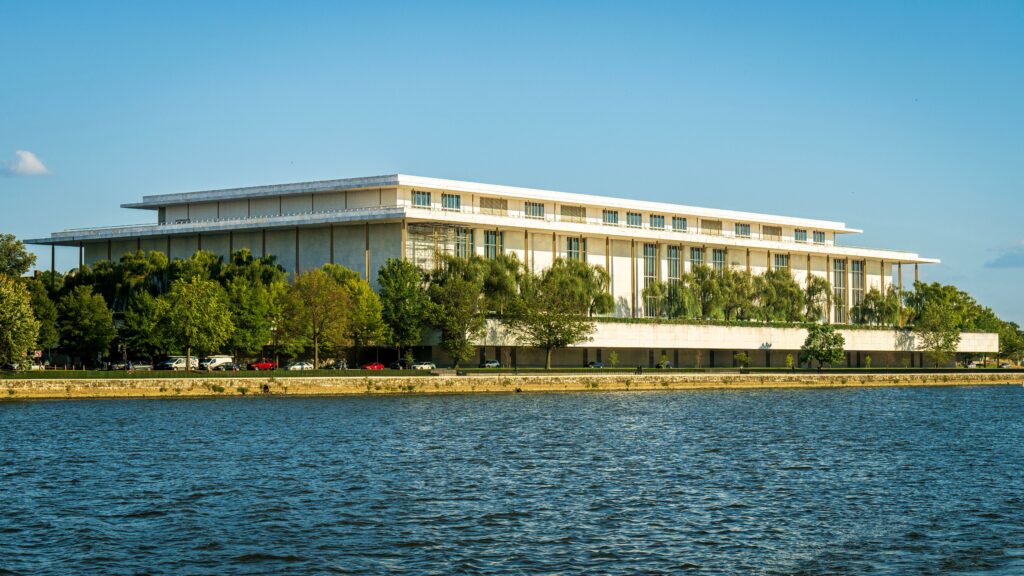
The case against him, made through critics of relatives, artists, suing Democratic rank-and-file committee members and the Kennedy Circle, centered on procedural legacies — that the court already discovered naming procedural flaws, that price ticket sales and titles suffer from social prejudice and social prejudice the identity of a memorial society can be rewritten with the help of the person who runs the committee.
Also Read – Why America’s Geography Makes It Almost Impossible to Defeat ?
The Legal Question That Won’t Go Away
The core dispute isn’t really about aesthetics — it’s about authority. A federal judge has already held that renaming the Kennedy Center requires an act of Congress, not a board resolution. The board’s newest maneuver avoids touching the center’s legal name directly while still adding Trump’s name to the physical structure, which is why opponents are preparing to challenge it again. That pattern — a ruling, a workaround, a new ruling — is itself the story: it shows how contested the line is between a board’s operational authority and a court’s power to check it.
The authority wants to prove the dictatorship . But in a time of democracy , it is devastating to watch the politicians do what ever they want to do.
Read – Beatty on Trump admin threats to demolish Kennedy Center: ‘Who’s going to stop them?’
FAQ
Is the Kennedy Center officially renamed after Trump?
Who controls the Kennedy Center board?
Why does the Kennedy Center keep closing?
What do you think? Comment below…
