

 By
By Key Takeaways
- Who he is: Flávio Bolsonaro is a 45-year-old senator from Rio de Janeiro and the eldest son of jailed ex-president Jair Bolsonaro.
- Where he stands: He finished first on October 4 with about 47.5% of valid votes to Lula’s 44.7% (97% counted), beating most polls. The runoff is October 25.
- The Trump factor: US tariffs (50% in 2025, a new 25% round confirmed in July) gave Lula a sovereignty message. Quaest found 51% of Brazilians think Flávio encouraged the pressure; only 30% accept his denial.
- The baggage: Reported messages seeking money from jailed banker Daniel Vorcaro for a film about his father cost him roughly seven points in runoff polling.
- The bottom line: Trump is both his rocket fuel and his anchor.
The Night the Polls Blinked
On Sunday night in Brasília, Flávio Bolsonaro did what the pollsters said he wouldn’t: he came first. Days earlier, Datafolha had him five points behind Lula. Instead he stood before supporters, called the result “the end of the PT era,” and promised he needs only one term.
Washington was watching closely.
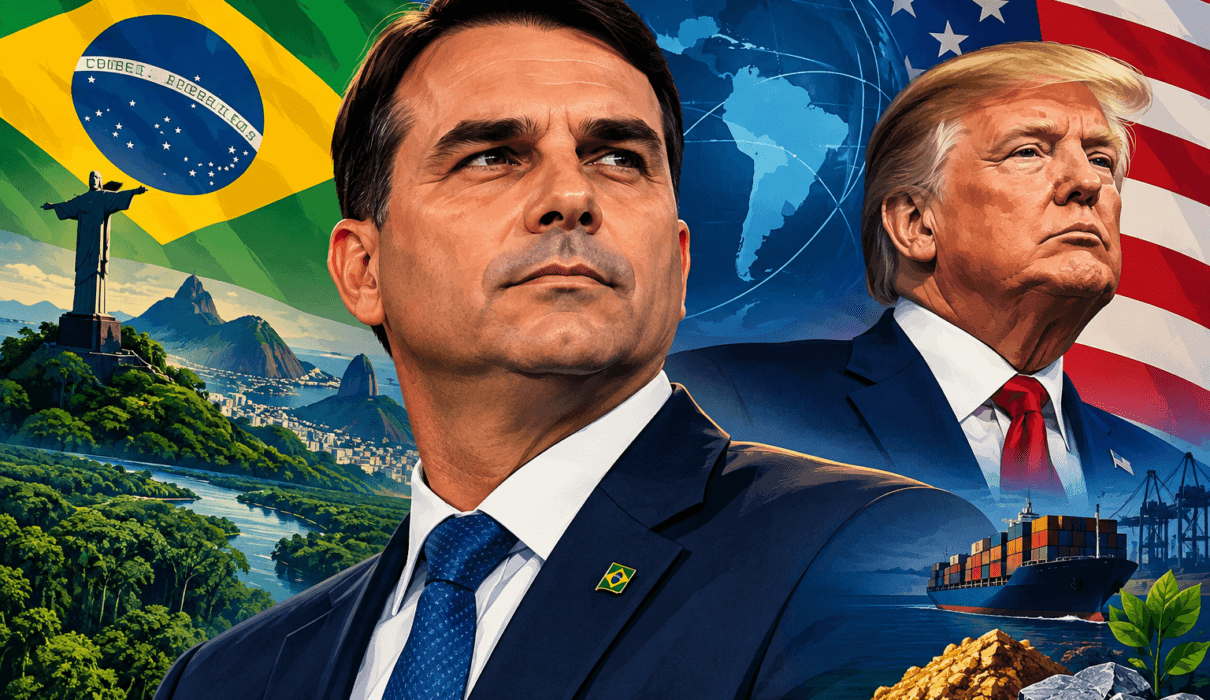
Here is my argument: Flávio Bolsonaro is the first Brazilian candidate whose biggest asset and biggest liability share a name, Donald Trump. Understanding that tension is the key to understanding this election.
Who Is Flávio Bolsonaro?
He has been a senator since 2019 and spent sixteen years before that as a Rio state deputy. For most of his career he was the family’s lawyer-in-waiting, the calm one. Then history rearranged the furniture.
His father was convicted of plotting a coup and sentenced to 27 years. In December 2025, from a hospital bed after surgery, Jair endorsed Flávio. Days later the son was already negotiating in public, saying his price for staying in the race was “Bolsonaro free and on the ballot.” He retracted it, but the slip revealed what this candidacy is partly about: a family trying to get its patriarch out.
He launched trailing Lula by about twelve points. By spring, AtlasIntel had him narrowly ahead. That is a remarkable climb for a man who was nobody’s first choice.
Why Trump Is Both His Asset and His Anchor
The asset. Trump-aligned candidates have been winning across Latin America. Flávio visited the White House, and he says Trump handed him a challenge coin. Prediction markets priced him as the favorite days before the vote. He also welcomed Washington’s terrorist designation of two criminal gangs, framing Lula as soft on crime.
The anchor. Trump’s 50% tariffs in 2025 were justified as a response to a “witch hunt” against Jair Bolsonaro, and Flávio’s brother Eduardo lobbied for US pressure. When a new 25% round arrived, Lula nicknamed it “TariFlávio.” The Quaest poll found 42% said the tariffs made them likelier to back Lula, against 27% for Flávio.
His defence is awkward. He told US trade officials tariffs would only strengthen Lula, then suggested better tools: visa suspensions and sanctions on Brazilian officials. Imagine telling voters, “I begged him not to hit your wallet, and suggested he hit the judges instead.”
Also Read – A new Bolsonaro could pull Brazil away from Europe — and toward Trump
What Does “Trump’s Orbit” Mean for an Ordinary Brazilian?
Picture a coffee exporter in Minas Gerais, a state that has backed the winner of every presidential election since 1985. She does not care about geopolitical branding. She cares whether her container clears the port at a price her buyer will pay.
For her, “orbit” is simple arithmetic:
- Trade. Flávio himself cited record Brazil-China trade of $171 billion. Orbits obey physics: you cannot pivot away from your largest customer.
- Security. Closer cooperation on organised crime is popular and plausible.
- Money. Flávio claims Lula wants to dethrone the dollar. Meanwhile Pix, Brazil’s beloved instant-payment system, became a political flashpoint. He wears a shirt saying Pix belongs to Bolsonaro; Agência Pública notes it was conceived under Michel Temer in 2018.
My reading: Flávio can move Brazil closer to Washington on security and diplomacy. He cannot move its economy out of Beijing’s gravity. A president who promises both ends up explaining one tariff after another.
Also Read – Trump Dividend Explained: The $5,000 Promise and Its Geopolitical Price Tag
The Case for the Other Side
Fairness demands the counter-argument. Supporters say Lula, 80, presides over a cooling economy, rising crime and corruption scandals, and that voters are tired. The right gained ground: Flávio’s PL won at least five governorships, and Republicanos took São Paulo and Minas Gerais. The Banco Master fraud has also rattled the Supreme Court, and the Workers’ Party is not untouched by it either. Flávio’s camp calls the film episode a smear. Brazilians must weigh those claims themselves.
FAQ…
Who is Flávio Bolsonaro?
When is Brazil’s runoff?
Can Jair Bolsonaro run?
Does Trump back Flávio Bolsonaro?
The Verdict
The runoff is a coin flip. Quaest’s last poll had Flávio ahead 44% to 42%; Datafolha had Lula up 48% to 45%. The first round showed polls understate the Bolsonaro vote.
The real question is not whether Flávio would pull Brazil into Trump’s orbit. It is whether voters will accept a president who would spend his first year explaining that orbit to the people paying for it. Both candidates claim to put Brazil first. October 25 decides which version voters believe.
What Do you Think? Comment Below…
