

 By
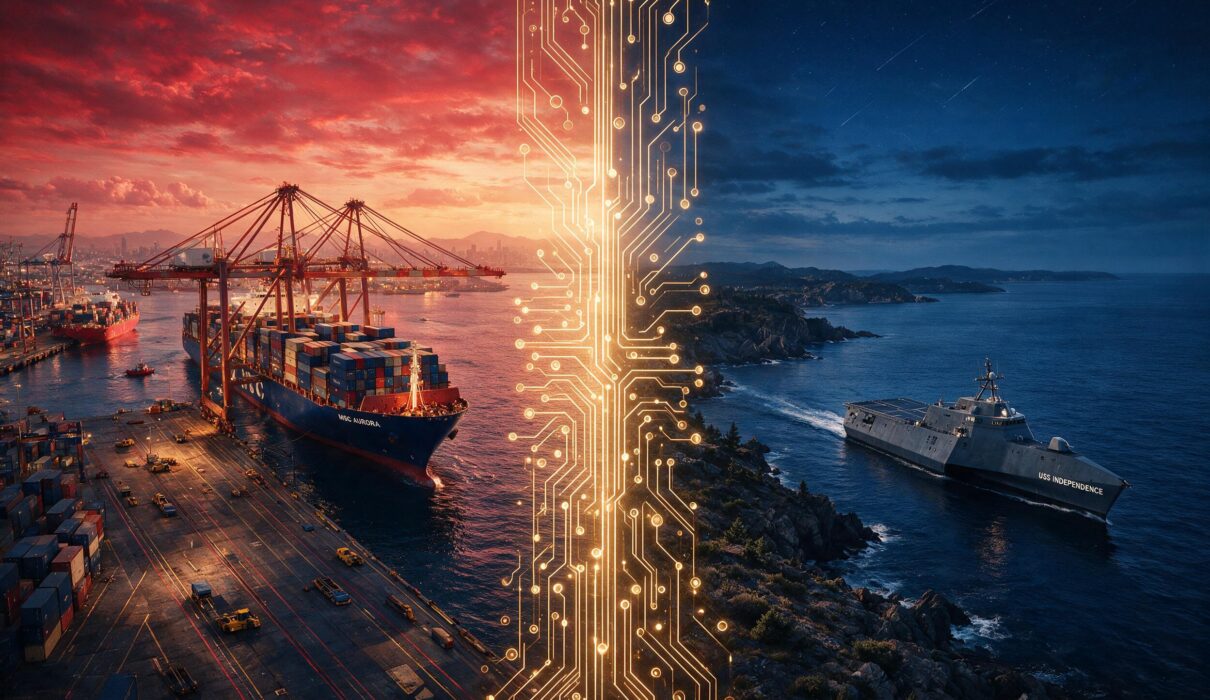
By Picture a container ship idling outside the Port of Long Beach, its hull stacked with parts that started life in a Chinese factory and will end up in an American car. A thousand miles above it, a satellite built with export-controlled components tracks a Chinese naval exercise near Taiwan. In Washington, a senator drafts a bill to ban a chip. In Beijing, a ministry drafts a countermeasure before the ink is dry.
This is the everyday texture of USA China relations in 2026: two economies fused at the hip, two governments preparing for a fight neither wants but neither will rule out.
That contradiction is exactly why this relationship matters. No other bilateral relationship touches more people, moves more money, or carries more risk of catastrophe if it goes wrong. How Washington and Beijing manage their rivalry will help decide the price of your next phone, the safety of Pacific shipping lanes, and whether the twenty-first century has a great-power war.
Key Takeaways
- USA China relations have shifted from cautious partnership to open strategic rivalry, though the two economies remain deeply intertwined.
- Trade, technology, Taiwan, and regional influence are the four battlegrounds where the rivalry plays out most visibly.
- Calling this a “new Cold War” is popular but imprecise — economic interdependence makes the analogy only partly accurate.
- Taiwan is the single most dangerous flashpoint, but most analysts still consider a near-term invasion unlikely rather than inevitable.
- The most probable future is not total decoupling or war, but a bumpy, unevenly managed competition that both sides try to keep short of conflict.
1. How USA–China Relations Changed From Partnership to Strategic Rivalry
A. From Diplomatic Engagement to Economic Partnership
For nearly four decades after Washington and Beijing normalized ties in 1979, American policy rested on a simple bet: bring China into the global economy, and it would gradually liberalize politically while becoming a responsible stakeholder in the US-led order.
China’s 2001 entry into the World Trade Organization was the high point of that bet. American companies got cheap manufacturing and a vast new market. Chinese growth lifted hundreds of millions out of poverty and turned the country into the world’s factory floor.
For a long stretch, this worked well enough for both sides to keep playing along, even as friction over currency policy, intellectual property, and market access simmered underneath.
B. The Rise of China and Growing American Concerns
The bet started looking shakier as China’s economy scaled up faster than almost anyone predicted, and its political system showed no sign of loosening. Washington’s calculus changed on three fronts at once: economic (a persistent, structural US trade deficit with China and concern over industrial overcapacity), technological (China’s rapid gains in telecoms, AI, and advanced manufacturing), and military (a Chinese naval and missile buildup that eroded the comfortable margin US forces once had in the Western Pacific).
By the time Donald Trump’s first administration branded China a “strategic competitor” in 2017, the bipartisan Washington consensus had already cracked. What followed was less a single decision than an accumulation of them: tariffs, export controls, investment screening, and a defense posture increasingly organized around the possibility of conflict with China.
That posture has only hardened since, through a first-term trade war, a pandemic-era rupture in trust, and a second Trump administration that reopened the tariff fight within weeks of taking office in 2025 before easing into a fragile, high-tariff truce after a Beijing summit in May 2026.
C. Why Beijing Sees US Policy as Containment
China’s leadership tells a different story about the same events. From Beijing’s vantage point, Washington’s shift is not a defensive response to Chinese behavior but a bid to keep China permanently subordinate — using tariffs, chip restrictions, and alliances with Japan, Australia, and the Philippines to box China in, the way it once boxed in the Soviet Union.
Chinese officials point to America’s own trade deficits and industrial-policy spending as evidence that Washington’s real complaint is not unfairness but the loss of unchallenged primacy.
There is something to both narratives, and pretending otherwise flattens a genuinely two-sided story. Washington has real grievances about market access, subsidies, and technology transfer that predate any containment strategy.
Beijing has a real grievance that some American policy has shifted from “compete fairly” to “prevent China from catching up” at all, regardless of how it behaves. Both things can be true, and understanding the rivalry requires holding them at once rather than picking a hero.
Also Read – The Rise of a Multipolar World: Global Power Shift Explained
2. The Major Battlegrounds of US–China Competition
A. Trade and Economic Competition
Trade is where the rivalry is most visible to ordinary consumers. After a chaotic run of escalations in 2025 that briefly pushed some US tariffs on Chinese goods above 100%, a February 2026 Supreme Court ruling struck down the administration’s use of emergency powers to impose many of those tariffs, forcing a pivot to other legal tools.
The result by mid-2026: average US tariffs on Chinese goods sitting somewhere in the 30–47% range depending on the product and legal authority used, with China’s retaliatory tariffs on US goods in the 20–32% range, and both countries essentially taxing the majority of their bilateral trade.
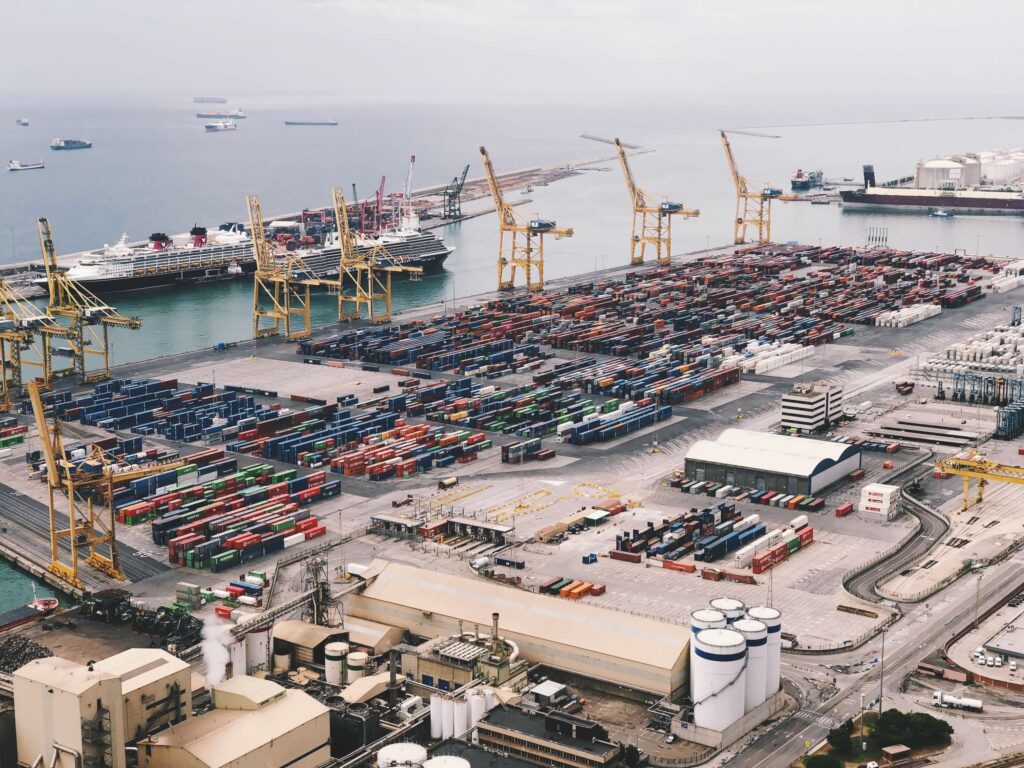
The practical effect has been a slow-motion rerouting of global commerce rather than a clean break. US imports from China have fallen sharply from pre-trade-war levels, but Chinese exports haven’t disappeared — they’ve been redirected through third countries and toward new markets in the developing world.
American exporters, especially farmers, have paid a real price as China has simply stopped buying as much from the United States. Anyone predicting a quick return to 2015-style trade relations is not reading the data.
B. The Technology and Semiconductor War
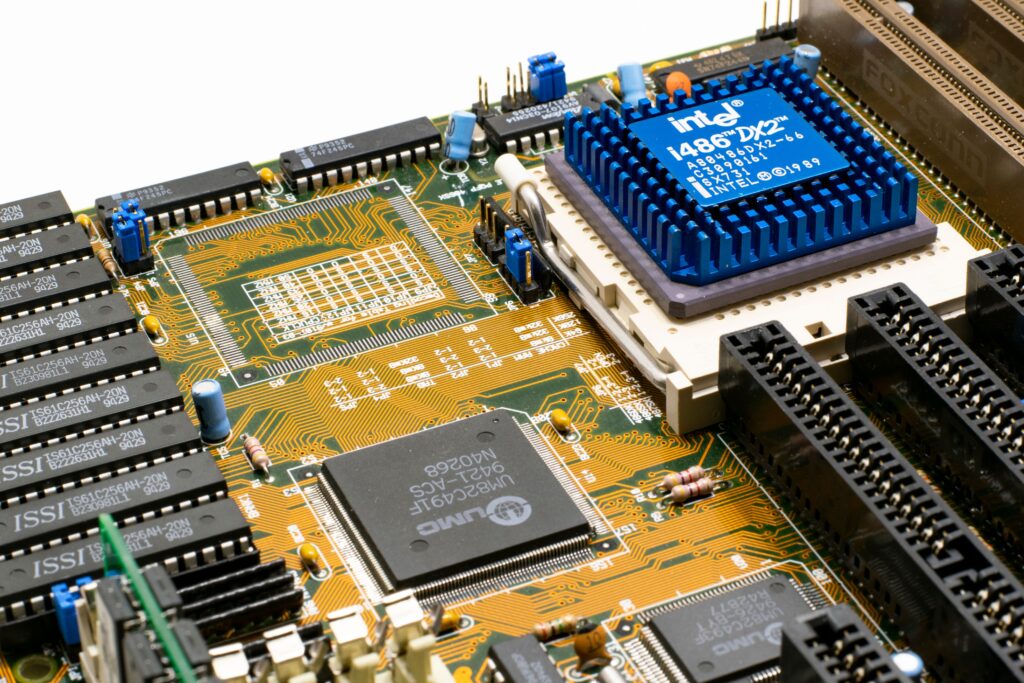
If trade is the loudest battlefield, semiconductors are the most consequential one. Advanced chips sit at the center of artificial intelligence, military systems, and everyday electronics, which is exactly why Washington has spent the past four years trying to keep China’s most advanced AI chip capabilities a generation or two behind America’s.
The policy has been anything but stable. Export rules tightened sharply under Biden, tightened further in 2025, then partially reversed in December 2025 when the Trump administration cleared a path for Nvidia’s H200 chips to reach approved Chinese buyers under a licensing framework — with the US government reportedly taking a cut of the value of each sale. Congress pushed back with legislation aimed at tighter, government-wide bans on chipmaking equipment exports. Commerce then tightened guidance again in mid-2026 to close loopholes that let restricted chips reach China through overseas subsidiaries.
My honest read on this: the flip-flopping has cost Washington more than it’s gained. Every reversal has told Chinese firms not to build a long-term strategy around any deal, which is exactly the incentive that has accelerated Beijing’s push into domestic chip production through Huawei and SMIC. Export controls that toggle between tight and loose every few months don’t slow China down as much as they signal to Beijing that self-sufficiency is the only reliable path — a self-defeating outcome if the goal was genuine technological containment.
C. Taiwan and the Risk of Military Conflict
Could the United States and China go to war? Taiwan is the scenario where it’s most plausible, though most defense analysts still treat an imminent invasion as unlikely rather than probable. Beijing claims Taiwan as its own territory and has never renounced the option of using force to bring it under mainland control. Washington maintains “strategic ambiguity” — supplying Taiwan with defensive weapons under the Taiwan Relations Act without explicitly promising to intervene militarily if China attacks.
It’s worth being precise about what’s actually happening versus what might happen. Chinese military aircraft cross into Taiwan’s air defense identification zone on most days; that’s political pressure and a rehearsal, not war. Beijing has significantly built up amphibious and missile capabilities aimed at Taiwan, and US officials have pointed to 2027 as a year by which Chinese forces may be postured to attempt an invasion if ordered to.
That is a capability timeline, not a declared intention — a crucial distinction that gets lost in a lot of alarmist coverage. Tensions actually cooled somewhat around the May 2026 Trump-Xi summit in Beijing, with a sharp, temporary drop in Chinese military activity near the island during the visit itself, even as US arms deliveries to Taiwan continued in the background.
Taiwan also matters economically far beyond its size: the island produces the overwhelming majority of the world’s most advanced semiconductors, which is one reason a conflict there would be catastrophic for the global economy, not just for the two militaries directly involved.
D. The Indo-Pacific and South China Sea
Away from Taiwan, the US and China are also jockeying across the wider Indo-Pacific, most visibly in the South China Sea. China claims nearly the entire sea through its “nine-dash line,” a claim an international tribunal rejected in 2016 and that Beijing has never accepted. Confrontations between Chinese coast guard vessels and Philippine ships — water cannons, ramming, and in some cases physical altercations — have become almost routine around contested reefs like Scarborough Shoal and Second Thomas Shoal, with a notable cluster of clashes in July 2026 alone.
The United States isn’t a claimant in these disputes, but its treaty alliance with the Philippines and its broader interest in freedom of navigation through waters carrying trillions of dollars in annual trade pull it in anyway. Joint US-Philippine-Japan maritime exercises have become more frequent and more operationally serious, which Beijing reads as encirclement and Washington frames as deterrence. Neither side is likely to back down, which points toward a durable, low-boil standoff rather than either resolution or war.
E. Competition for Global Influence
Beyond hard military and economic flashpoints, Washington and Beijing are competing for something less tangible but arguably more consequential over decades: who other countries choose to align with. China’s Belt and Road infrastructure lending has built ports, railways, and power plants across Africa, Latin America, and Southeast Asia, buying goodwill and leverage even where projects have run into debt or quality problems. The United States has leaned more heavily on security alliances, trade access, and institutions like the G7 and international financial bodies to hold its coalition together.
Neither approach is cleanly winning. Most countries in the Global South are not choosing sides so much as hedging — taking Chinese infrastructure money and American security guarantees simultaneously, and resisting pressure from either capital to pick a lane. That hedging behavior may be the most important trend of all, because it suggests the future international order will be less bipolar than either Washington or Beijing would like.
Also Read – G7: Bold Strategies Shaping World Order
3. Are the United States and China Entering a New Cold War?
No — not in the way that phrase usually means, though the label captures something real. The US-Soviet Cold War featured two economies with almost no meaningful trade, two rival ideological blocs competing for the loyalty of the entire world, and constant proxy wars. Today’s US-China rivalry has none of that in the same form: American and Chinese companies remain each other’s customers, suppliers, and investors, even amid tariffs and export controls, and no other country is being asked to join an exclusive ideological camp the way Cold War allies were.
What the term does capture accurately is the sense of a systemic, long-horizon contest between two powers with fundamentally different political systems, competing for technological and military primacy, with real potential for miscalculation to spiral. Analysts who reject the “Cold War” label point to globalized supply chains and the absence of a hard ideological bloc system as the key differences; those who embrace it point to the return of great-power military buildup, tech decoupling, and alliance politics reminiscent of the earlier era.
My own view: “new Cold War” is a useful shorthand for journalists but a poor guide for policy, because it invites people to reach for Cold War tools — containment, blocs, proxy conflicts — that don’t map cleanly onto an economically fused relationship. A more accurate description, and one some observers used after the May 2026 Trump-Xi summit, is a “cold peace”: intense, unresolved competition, managed through direct dialogue rather than isolation, with both sides too economically entangled to fully sever ties even if they wanted to.
4. The Future of USA–China Relations
A. Scenario One — Managed Strategic Competition
The most likely path, and the one both governments have been signaling they prefer, is continued rivalry without full-scale conflict: competing hard in technology and military capability while keeping trade and diplomatic channels open enough to prevent a crisis from spinning out of control. This is essentially where the relationship sits today, and the periodic Trump-Xi summits suggest both leaders see value in keeping a direct line open even as their bureaucracies compete underneath them.
B. Scenario Two — Economic and Technological Decoupling
A harder break remains possible, particularly in strategic sectors like semiconductors, AI, and critical minerals, where both governments have already taken real steps toward separation. Full decoupling — a complete unwinding of trade, investment, and technology ties — would be extraordinarily costly for both economies and the world, given how embedded Chinese manufacturing and American demand remain in each other’s supply chains. A partial, sector-specific decoupling in defense-relevant technology is far more plausible than a total divorce, and arguably already underway.
C. Scenario Three — Military Crisis and Global Consequences
The most dangerous scenario, though the least likely in any given year, involves a Taiwan Strait clash, a South China Sea incident that kills personnel and escalates, a serious cyberattack, or an accidental military collision that neither government intends but neither can walk back politically. It’s important not to conflate elevated tension with imminent war: strategic competition (the current baseline), crisis (a serious diplomatic or military incident requiring urgent de-escalation), and armed conflict (actual fighting) are three distinct stages, and the relationship has spent the past several years cycling between the first two without tipping into the third.
The consequences of how this rivalry unfolds ripple far beyond Washington and Beijing.
India benefits from Western supply-chain diversification away from China but faces its own long-standing border tensions with Beijing.
Europe is being pushed to choose between economic ties to China and security alignment with Washington, a position it has resisted taking cleanly.
Russia has leaned harder into China as a economic lifeline amid Western sanctions, deepening a partnership that troubles US strategists.
Southeast Asian nations are hedging aggressively, taking benefits from both powers while resisting exclusive alignment.
And global trade and the world economy absorb the volatility of every tariff announcement and export-control reversal, since so much of the world’s manufacturing and technology base runs through one or both of these two economies.
5. Frequently Asked Questions
Why are USA–China relations important?
Why are the United States and China rivals?
Could the US and China go to war over Taiwan?
Are the US and China entering a new Cold War?
How does US–China rivalry affect the global economy?
What is the future of USA–China relations?
6. Conclusion
There’s a temptation, in writing about USA–China relations, to reach for a tidy ending — a prediction about who “wins.” That framing misses the point. This is not a contest with a finish line where one side raises a trophy and the other packs up. It is a long, uneven negotiation between two powers that will still be sharing a planet, a climate, and a global economy decades from now, whatever the state of their rivalry.
The real question is not which country comes out on top. It’s whether Washington and Beijing can keep competing — in chips, in trade, in influence, in military capability — without letting that competition detonate into the kind of conflict that would make everyone’s “win” meaningless. Every other question, from Taiwan to tariffs to the next AI export rule, is really a version of that one.
How this relationship is managed over the next decade will shape the price you pay for electronics, the stability of the industries you work in, and the odds of the first great-power war in eighty years. It’s worth paying attention — not as a spectator sport, but as the backdrop against which the rest of this century will be written.
What do you think? Comment below….
