

 By
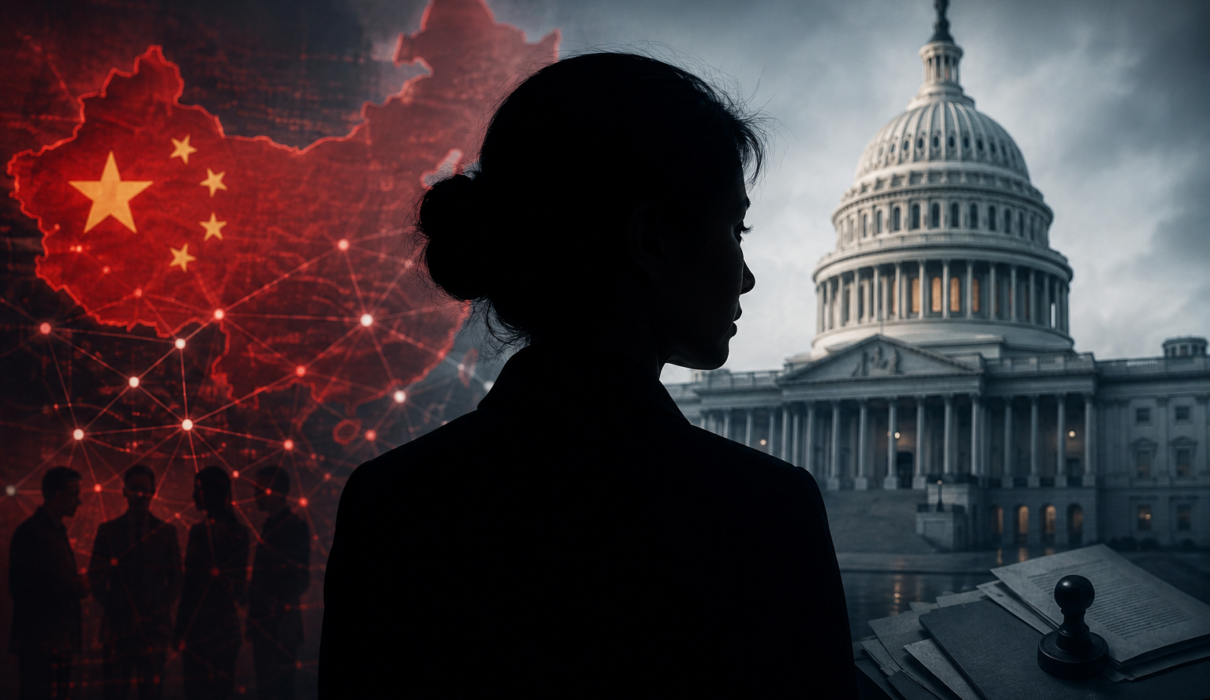
By Modern strategic competition is no longer decided only by soldiers, tanks, aircraft, and missiles. Increasingly, it is fought in city council meetings, campaign fundraisers, congressional internship programs, and quiet dinners between rising political stars and charming strangers. The Fang Fang case is one of the clearest illustrations of this shift — and it deserves to be understood not as gossip, but as a case study in how great powers now compete for advantage.
Who Was Fang Fang, and What Do We Actually Know?
Christine Fang, known socially as Fang Fang, was a Chinese national who spent several years building relationships with local and national politicians in the United States, primarily in the Bay Area, between roughly 2011 and 2015. According to reporting first published by Axios in 2020 and later reinforced by declassified FBI files, U.S. intelligence officials assessed that Fang was likely connected to China’s Ministry of State Security.
It is important to separate what has been reported from what has been proven. Fang has never been criminally charged, and she left the United States in 2015 before the investigation concluded. U.S. officials have said they do not believe she obtained classified information. At the same time, FBI records reportedly describe her cultivating access to political figures — including Rep. Eric Swalwell — through fundraising, campaign volunteering, and personal relationships, and the bureau reportedly investigated whether internships were traded for donations. A 2017 case review found no evidence of federal corruption violations by Swalwell himself. In short: allegations, assessments, and investigative interest — not a courtroom conviction.
Also Read – Taiwan’s Security Strategy: Challenges, Military Preparedness, and Global Implications..
Why Influence, Not Just Espionage, Is the Real Story
What makes the Fang Fang case strategically significant isn’t a single alleged relationship — it’s the method. Influence operations don’t require stealing secrets. They require patience. An intelligence service that cultivates a city council member today is betting on who that person becomes in fifteen years: a governor, a senator, a committee chair.
This is the essence of modern intelligence warfare. Human networks, social access, and long-term relationship building can generate something more durable than a single leaked document — a standing channel of influence embedded inside the target country’s own political system. Unlike a cyberattack, it leaves no digital trail. Unlike a defector, it requires no confession. It simply requires proximity, charm, and time.
The Broader Shadow War
The Fang Fang case fits inside a much wider pattern of U.S.-China strategic competition that rarely makes headlines the way a missile test does. Chinese intelligence activity, according to U.S. officials, spans a spectrum: cyber intrusions into critical infrastructure, industrial and technology espionage aimed at closing innovation gaps, disinformation campaigns designed to shape public opinion, and — as this case illustrates — political access-building at the local level, long before a target reaches national office.
Washington runs its own version of this competition, of course; every major power gathers political intelligence on rivals and allies alike. That symmetry doesn’t make the practice less consequential — it makes it a permanent feature of great-power rivalry, not an aberration.
This is precisely why national security planning today extends well beyond the Pentagon. Counterintelligence units, FBI field offices, and even state legislatures have become front-line institutions in a contest that never technically declares war.
Also Read – Cyber Security: The Digital Iron Chttps://strategicworld360.com/cyber-security/urtain
The Real Battlefield Is Bigger Than One Case
The lasting lesson of Fang Fang isn’t about one woman, one congressman, or one FBI file. It’s a warning about the terrain of modern conflict itself. Political institutions, digital networks, emerging technology, and the flow of information are becoming as strategically contested as any border or sea lane.
The next major security failure may not come from a missile gap. It may come from a relationship nobody thought to question.
What do you think ? Comment Below…
