

 By
By In the summer of 1962, a single decision made in Moscow and another made in Washington brought the entire planet within hours of nuclear war. Millions of people who had never met a Soviet official or an American president suddenly found their lives depending on conversations happening in rooms they would never see.
That is the strange, quiet power of international relations: it decides the price of your fuel, the safety of your job, the news that reaches your phone, and sometimes, the air you breathe.
More than sixty years later, the stakes have not shrunk, they have multiplied.
In 2026, dozens of active armed conflicts are unfolding across the globe, from Eastern Europe to East Africa, even as fragile ceasefires hold in places like Gaza. A trade dispute between two superpowers can reshape a supply chain in a small factory town overnight.
This guide breaks down what international relations actually means today, how nations interact with each other, and why understanding this subject, sometimes called foreign policy or global affairs, has never mattered more for ordinary people.
1. What Is International Relations
International relations, often shortened to IR, is the study of how countries, international organizations, and even non-state groups like corporations and NGOs interact with one another. It covers diplomacy, trade, security, human rights, and global governance, and is closely tied to fields like geopolitics and world politics.
At its core, IR tries to answer three questions: how do nations avoid war, how do they cooperate for mutual benefit, and how do they compete for power and resources. It draws from political science, economics, history, and sociology, which is why it feels less like a single subject and more like a lens for understanding the entire world.
Unlike domestic politics, there is no single global government enforcing the rules. Nations largely regulate themselves through treaties, alliances, and shared institutions like the United Nations, which makes trust, negotiation, and leverage the real currency of world affairs.
2. Why International Relations Matters In 2026
The world in 2026 no longer fits neatly into old categories of “democracy versus autocracy” or “East versus West.” Alliances now form around shared interests rather than shared ideology, which makes global politics harder to predict and far more consequential for daily life.
Consider how interconnected modern crises have become. Frequent high-level meetings between the United States and China are keeping their rivalry stable on the surface, even as tariff disputes and technology restrictions continue underneath. Tension in the Gulf pushes up household energy bills thousands of miles away, while conflicts in Sudan and Ukraine reshape budgets and refugee policy across entire continents.
Understanding international relations is no longer optional knowledge reserved for diplomats. It helps explain why prices rise, why certain products disappear from shelves, and why some countries suddenly become allies while others grow distant.
Also Read – Democrats vs Republicans: Key Differences Explained
3. Types Of Relations Between Countries
Nations do not interact through a single channel. Their bilateral and multilateral relations stretch across several overlapping dimensions, each shaping global stability in its own way.
A. Diplomatic Relations
Diplomatic relations are the formal backbone of how states talk to each other. Embassies, ambassadors, and treaties exist so that disagreements can be resolved through dialogue rather than force.
Recent years show diplomacy still working, even amid chaos. Peace agreements have quietly taken hold between India and Pakistan, Thailand and Cambodia, and Rwanda and the Democratic Republic of Congo, while a fragile ceasefire between Israel and Hamas has held in Gaza since October 2025. Each case shows how formal negotiation, even after violence, remains the primary tool for de-escalation.
B. Economic And Trade Relations
Trade is the connective tissue of the modern world. Countries exchange goods, services, and capital through agreements, tariffs, and trade blocs that directly shape everyday prices and job markets.
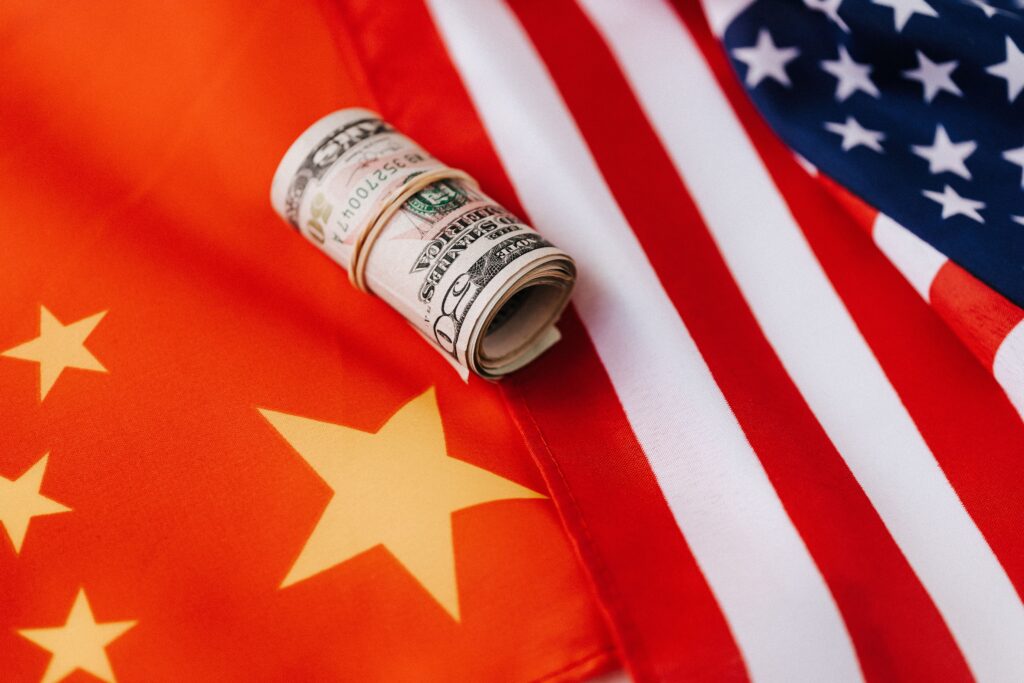
In 2026, economic relations are being tested by tariff disputes and industrial overcapacity, particularly between the European Union and China over electric vehicles, solar components, and semiconductors. A tariff truce reached between the United States and China has offered temporary stability, but has not resolved deeper structural friction over technology restrictions.
C. Military And Security Relations
Security relations involve defense alliances, arms agreements, and cooperative frameworks designed to deter conflict. Organizations built around collective defense allow smaller nations to gain protection they could not secure alone.
Security risk officers around the world now rank state-based armed conflict as their top concern, and 2026 has already seen a major U.S. military operation in Venezuela alongside continued fighting between Sudan’s army and paramilitary forces. New battlefield technologies, including autonomous weapons systems, are also forcing governments to renegotiate old rules of engagement.
D. Cultural And People To People Relations
Not every relationship between nations happens in a boardroom or a war room. Student exchanges, tourism, sports diplomacy, and shared media all build informal bridges between societies.
These softer connections matter more than they seem. Recent global public opinion surveys show that citizen views of major powers like the United States and China can shift dramatically depending on cultural exposure and lived experience, often independent of what governments are doing politically.
E. Environmental And Climate Relations
Climate change does not respect borders, which makes environmental cooperation one of the most urgent forms of international relations today. Agreements on emissions, deforestation, and clean energy require nations to coordinate despite competing economic priorities.
Trade policy is increasingly being used as a climate tool as well, with carbon-related tariffs and green subsidies becoming new points of negotiation between major economies, especially around electric vehicles and renewable energy supply chains.
F. Technological And Digital Relations
Artificial intelligence, cybersecurity, and data governance have become central to modern diplomacy. Nations now negotiate over technology export controls the same way they once negotiated over oil or steel.
The picture is now openly split. Western nations have leaned on frameworks like the Bletchley Declaration and the EU AI Act, while in July 2026, China led 29 countries in launching the World Artificial Intelligence Cooperation Organization, a rival governance body headquartered in Shanghai with no major Western member. Meanwhile, the India-hosted AI Impact Summit produced a broader, 86-country declaration on inclusive AI principles, showing how technology governance is becoming its own arena of great-power competition.
Also Read – Why Rare Earth Minerals Have Become a Geopolitical Weapon ?
4. Key International Organizations You Should Know
Global cooperation runs through a handful of major institutions that anyone studying international relations should recognize.
A. The United Nations
The UN remains the closest thing to a global forum, coordinating peacekeeping, humanitarian aid, and international law through bodies like the Security Council and General Assembly.
B. Nato And Regional Security Alliances
NATO and similar regional pacts bind member states to mutual defense commitments, deterring aggression through the promise of collective military response.
C. The World Trade Organization And Economic Bodies
Institutions like the WTO, IMF, and World Bank set rules for global trade and provide financial stability during economic crises, though their authority is increasingly contested by regional trade blocs.
D. Regional Blocs Like The Eu Asean And Brics
Groupings such as the European Union, ASEAN, and BRICS allow neighboring or aligned nations to coordinate economic and political policy, often serving as counterweights to single-superpower dominance.
5. Core Theories That Explain International Relations
Scholars use a handful of core theories to explain why states behave the way they do on the world stage.
A. Realism
Realism argues that international politics is fundamentally about power. States act in their own self-interest, and cooperation only happens when it serves survival or advantage.
B. Liberalism
Liberalism believes cooperation is not just possible but common, especially through institutions, trade, and shared democratic values that reduce the likelihood of conflict.
C. Constructivism
Constructivism focuses on ideas, identity, and perception. It argues that how nations see themselves and each other shapes behavior just as much as raw power or economic interest does.
Also Read – American Congress Is Crumbling Into Chaos !
6. Major Global Trends Shaping International Relations In 2026
The current global order is best described not as neatly multipolar, but as unstable and fluid, with no single framework yet replacing the old assumptions of the past.
A. A New Us China Balancing Act
The relationship between the United States and China remains the single most consequential rivalry in global politics. Frequent high-level summits between Presidents Trump and Xi are helping maintain a fragile stability, but deep structural tensions around technology restrictions and regional security remain unresolved.
B. Fluid Alliances Beyond Ideology
Traditional lines between democracies and autocracies have blurred. Countries increasingly choose partners based on economic interdependence and pragmatic security needs rather than shared political systems, a pattern visible in how differently nations have aligned around the new AI governance bodies.
C. Declining Foreign Aid And Its Ripple Effects
Several major donor nations, including the United States, France, Germany, and the United Kingdom, have significantly reduced foreign aid budgets for a second consecutive year. Humanitarian organizations warn that this pullback is having severe consequences for vulnerable populations dependent on international support in places like Sudan and the Sahel.
D. Ai And Technology In Diplomacy
Artificial intelligence is reshaping everything from intelligence gathering to public diplomacy. Governments are racing to set international norms before the technology outpaces the rules meant to govern it, resulting in competing governance blocs rather than one unified standard.
E. A More Fragmented Multipolar World
Rather than a clean shift from one superpower to several, the world is experiencing partial alignments and selective cooperation. Formal institutions increasingly struggle to act, pushing nations toward smaller coalitions of the willing, as seen in regional peace deals brokered outside traditional UN channels.
Also Read – One Big Beautiful Bill Act Explained
7. How International Relations Shapes Everyday Life
It is easy to think of international relations as something confined to summits and treaties, but its effects reach far closer to home. A tariff decided in a foreign capital can raise the price of an electric vehicle. A sanctions package can determine whether a factory keeps its workers employed.
Energy prices, internet regulations, the availability of certain medicines, and even the cost of a smartphone chip are all quietly influenced by diplomatic decisions made far away. When two nations negotiate a trade deal or a security pact, ordinary families feel the outcome long before they hear the news.
This is why international relations deserves attention beyond classrooms and policy circles. It is not an abstract subject; it is the invisible architecture behind daily economic and social life.
8. Careers In International Relations
Demand for professionals who understand global affairs continues to grow, particularly in diplomacy, international development, and global security. Employers increasingly value candidates who combine traditional diplomatic skills with expertise in data analysis and cybersecurity.
Popular career paths include foreign service and diplomacy, international development and humanitarian work, global security and intelligence analysis, international trade and economic policy, and journalism focused on global affairs. Specializations like environmental policy and technology governance are also growing quickly as climate and AI issues take center stage in global politics.
Read – What is international relations? Definition, Scope, Importance & More
9. My View on International Relations
In my view, international relations is about maintaining a careful balance between peace, national interests, and economic prosperity. No country can succeed in isolation, but neither can it afford to ignore its own security or strategic priorities. The most effective foreign policy is one that combines diplomacy, economic strength, and credible defense capabilities.
Today, economic power has become one of the strongest drivers of global influence. Nations that lead in innovation, trade, and industrial capacity are better positioned to shape international decisions than those relying solely on military force. At the same time, technology—especially artificial intelligence, semiconductors, and cyber capabilities—is rapidly redefining global competition.
I believe the world is moving toward a multipolar order, where several major powers will influence international affairs rather than a single dominant nation. This transition creates opportunities for cooperation but also increases the risk of geopolitical rivalry. As a result, international organizations such as the United Nations, the World Trade Organization, and the International Monetary Fund remain important, but they require meaningful reforms to better reflect today’s global realities.
For countries like India, strategic autonomy should remain the guiding principle. Building strong partnerships while preserving independent decision-making allows nations to protect their interests without becoming overly dependent on any single power.
Finally, I believe lasting stability cannot be achieved through military strength or diplomacy alone. Sustainable peace requires a combination of credible deterrence, constructive dialogue, economic resilience, and technological leadership. In an increasingly interconnected world, the countries that successfully balance competition with cooperation will be best positioned to ensure long-term security, prosperity, and global influence. International relations is ultimately not just about managing conflicts—it is about creating conditions where nations can compete responsibly while working together on challenges that affect humanity as a whole.
Read – international relations
10. Frequently Asked Questions
What Is The Simple Definition Of International Relations?
Why Is International Relations Important?
What Are The Main Theories Of International Relations?
What Is The Difference Between Diplomacy And International Relations?
How Does International Relations Affect The Economy?
What Jobs Can You Get With An International Relations Degree?
What Is Happening With US China Relations In 2026?
Is International Relations The Same As Political Science?
11. Conclusion
Behind every headline about tariffs, summits, or ceasefires are real people trying to build stable lives in an unpredictable world. International relations can feel distant and abstract, filled with jargon and far-off decision-makers, but it ultimately comes down to something very human: how we choose to treat one another across borders, differences, and disagreements.
As 2026 unfolds into a year of shifting alliances and new technologies, one truth remains unchanged. Nations, like people, do better when they choose dialogue over division, even when it is hard. Understanding international relations is not just for diplomats and scholars, it is for anyone who wants to make sense of the world they are living in, and perhaps, play a small part in shaping a more cooperative one.
What do you think ? Please comment …
Your opinion is my motivation…
