

 By
By The United States can build an F-35 fighter jet worth $80 million. It cannot build one without asking China’s permission first.
That permission has a name. It’s called a rare earth export license. And Beijing just decided to stop granting them.
This isn’t a trade dispute. It isn’t a tariff war. It is something the world has never quite seen before — a nation wielding geology as a weapon, and doing it so quietly that most people didn’t notice until the factories started closing.
In this article i will discuss how the rare earth minerals become a geopolitical weapon.
1. It’s Not About Scarcity Of Rare Earths — It’s About Chokepoints
Rare earths aren’t actually rare. You can find them in India, Brazil, Australia, even the ocean floor. The weapon isn’t the mineral. It’s the refinery.
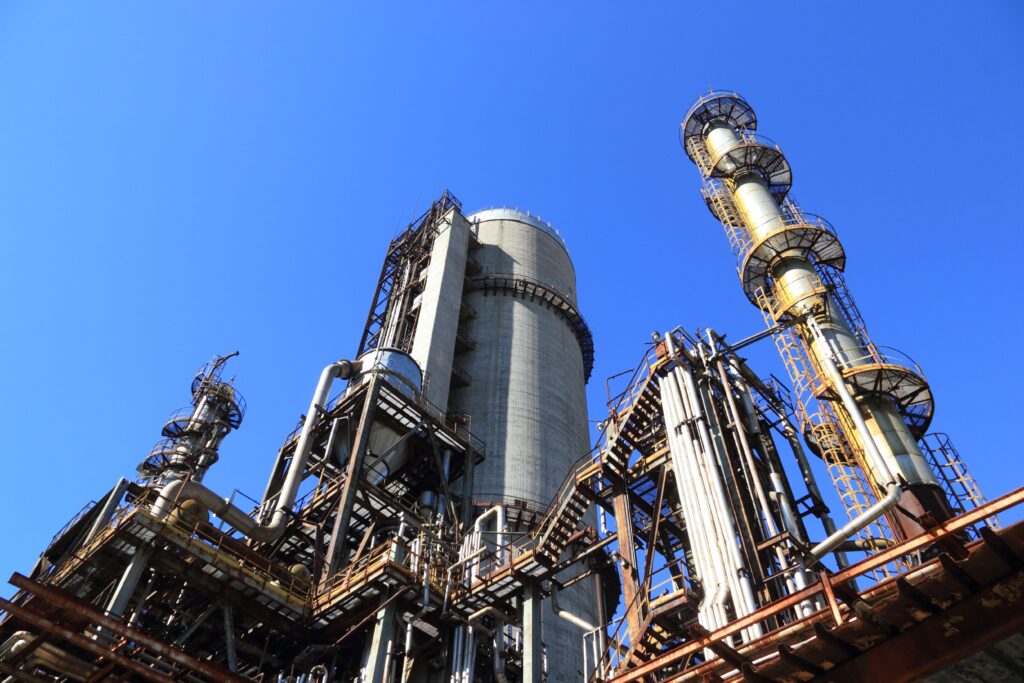
China spent 40 years building processing infrastructure that nobody else wanted to build — because it’s dirty, expensive, and technically brutal. The West outsourced that problem to China, and China quietly turned that outsourcing into a stranglehold. Even if the US mines ore in Montana tomorrow, it still has to send it to China to be processed. That’s the trap.
The analogy: Imagine you grow the wheat but someone else owns every flour mill on earth. You’re not a bread power. You’re a raw material supplier.
2. China Didn’t “Weaponize” Minerals — The West Handed Them the Weapon
This is the uncomfortable truth. The 2025 export restrictions didn’t come out of nowhere. For decades, Western corporations chose Chinese suppliers because they were cheap. Governments let it happen because economists said “comparative advantage” and “free markets.” Nobody wanted to fund a messy, polluting refinery in their backyard.
China didn’t build a trap. The West walked into one — eyes open, quarterly earnings in hand.
3. The Real Victims Are Neither the US Nor China
When China cuts rare earth exports, who actually suffers first? Not the Pentagon. Not the White House. It’s the factory worker in Michigan whose plant shuts down (Ford’s Chicago factory, June 2025), the EV startup that can’t source magnets, the Taiwanese chipmaker caught in the crossfire.
Geopolitical weapons always have civilian casualties. Rare earths are no different — they’re just quieter and slower.
Also Read – Trade Wars Made Simple: A Beginner’s Guide
4. This Is the New Nuclear Deterrence — But Scarier
Nuclear weapons created MAD — Mutually Assured Destruction. Nobody uses them because everybody loses. Rare earth leverage is asymmetric. China can inflict economic pain on the US without a single soldier moving, without triggering a military response, and while maintaining plausible deniability (“it’s just export regulation”).
There’s no red phone for supply chain warfare. No Geneva Convention for mineral embargoes. That’s what makes it genuinely dangerous — it exists in the grey zone where international law has no answer.
5. The “Diversification” Response Is Mostly Theater — For Now
The US $400M investment in MP Materials, the EU’s 60 strategic projects, Canada’s mining push — these are real, but let’s be honest about the timeline. China’s processing lead is measured in decades, not years. By the time the West builds alternative refining capacity, the geopolitical landscape will have already been shaped by China’s leverage.
The countries that will actually matter in the next 10 years aren’t the US or EU — they’re DRC, Myanmar, Greenland, Kazakhstan — the new swing producers. Whoever builds relationships with them NOW wins the next round of this game.
Also Read – “Why US Citizenship Is Suddenly at the Center of Global Politics in 2026?”
6. India’s Specific Opportunity (and Specific Blindspot)
Let’s talk about the country nobody in this conversation is paying enough attention to — India.
Here are three facts that should be on the front page of every newspaper in this country right now:
India holds the world’s third-largest reserves of rare earth elements — around 8% of global reserves — and yet contributes less than 1% of global REE mining output. Read that again. Third largest reserves. Less than one percent of output. That gap isn’t geology. That’s a policy failure dressed up as patience.
For 75 years — from 1950 until March 2025 — the entire rare earth sector was locked inside a government monopoly. Private players were simply not allowed in. Meanwhile, China opened its sector to private companies in the 1990s, giving them financial incentives, simplified laws, and processing infrastructure — and used that head start to become the world’s dominant force. India spent those same decades in committee.
And here’s the one that stings most: even today, India imports 60–80% of its rare earth permanent magnets by value and 85–90% by quantity — almost entirely from China. We have the ore in the ground. We are buying back the finished product from the country that refined it.
But here’s what gives me genuine hope. India is finally moving — and moving with real money behind it.
In November 2025, the government approved a ₹7,280 crore scheme to develop 6,000 metric tonnes per annum of integrated rare earth permanent magnet manufacturing capacity — covering the full value chain from rare earth oxides to finished magnets. That’s not a pilot project. That’s an industrial commitment.
The Union Budget 2026–27 announced Dedicated Rare Earth Corridors in Odisha, Kerala, Andhra Pradesh, and Tamil Nadu — focusing on mining, processing, research, and manufacturing — linking directly into IREL’s existing extraction and refining facilities.
And crucially, in March 2025, India finally ended IREL’s monopoly — officially allowing private sector exploration and mining of rare earth elements for the first time. The door that was shut for three quarters of a century is now open.
7. My View
The world is panicking. I’m not.
Yes, China holds the lever. Yes, the West is scrambling. But panic is what happens when you mistake a slow crisis for a sudden one. The warning signs were always there — and frankly, Western governments chose comfort over caution for decades. They didn’t miss this. They ignored it. That’s not China’s fault. That’s a policy failure wearing a business suit.
But here’s what gives me hope — countries like India are finally being forced to look inward.
India doesn’t need to choose between Washington and Beijing. It needs to choose itself first. It has the deposits. It has IREL . India has the scientific talent. What India has lacked is urgency.
That urgency has now arrived — giftwrapped by a geopolitical crisis we didn’t create but can absolutely turn to our advantage.
The nations that build domestic rare earth capacity today won’t just be resource suppliers tomorrow. They’ll be the ones writing the rules of the next world order.
This crisis isn’t the end of the story. For India, it might just be the beginning.
History will not remember who mined the minerals — it will remember who controlled them.
Comment below what do you think about this …..
