

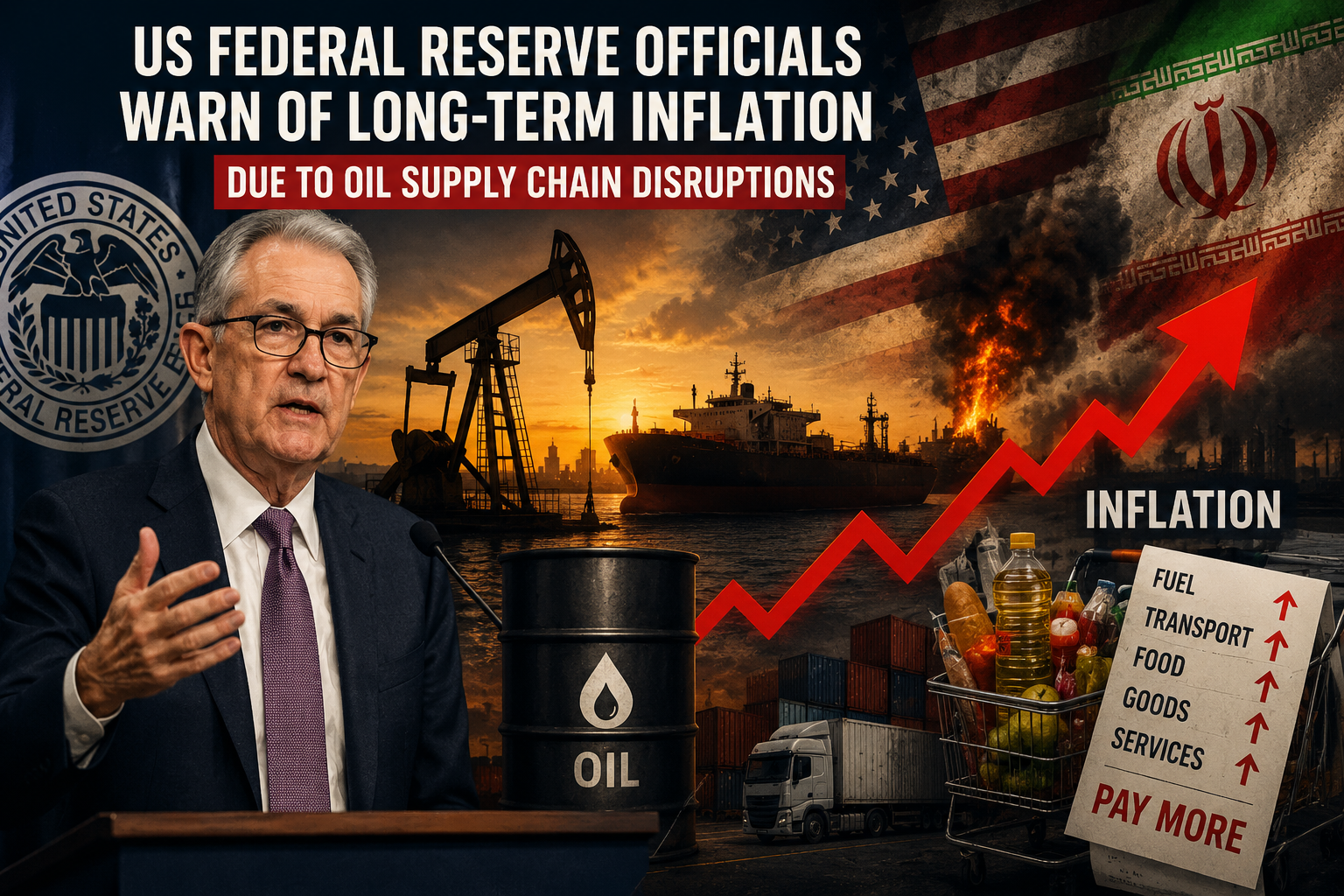
“Your money may soon buy less than you think — US Federal Reserve officials are warning that oil supply chain disruptions could fuel long-term inflation.”

Long term Inflation

“US Federal Reserve officials warned that the ongoing U.S.-backed conflict with Iran could disrupt global oil supply chains, which may further drive inflation higher. Since energy is the backbone of any economy, any major disruption in oil supply can severely affect transportation, manufacturing, and overall economic activity, ultimately increasing prices across the economy.

Also Read – Consumer Price Index (CPI): Impact on Your Money

Austan Goolsbee, President of the Chicago Fed, said that business executives told him shortly after the conflict began on February 28 that a short-term rise in oil prices would not be a major problem. However, if oil prices remain high for months, it could place intense pressure on global supply chains — similar to what helped fuel the inflation surge during the COVID-19 pandemic.

If the conflict continues, supply chain disruptions could worsen and push inflation even higher. As a result, ordinary people may have to pay more for the same goods and services that previously cost less.”

(Source-Reuters)

FREE

Get it free 🎁

A monthly briefing on geopolitics, economy, and defence — no fluff

No spam. Unsubscribe anytime

administrator
Srittam is an analyst and researcher specializing in global power dynamics, international relations, and the political economy of conflict. His work traces how great-power rivalry, strategic alliances, energy security, and trade policy converge to reshape the international order — from shifting military balances to the economic statecraft driving today's realignments.Srittam's analysis moves beyond headlines to map the underlying structures of power: why states act as they do, how markets respond to geopolitical risk, and what these shifts mean for governments, businesses, and ordinary citizens navigating an increasingly contested world. His approach pairs rigorous, evidence-based research with a clarity of writing that makes complex global developments accessible without oversimplifying them.He writes at the intersection of strategy and consequence — connecting the dots between diplomatic maneuvering, economic policy, and the everyday realities they produce.Contact: analysis@strategicworld360.com

    Leave a Reply

    Your email address will not be published. Required fields are marked *

    ×

    Login to your account

    Don't have an account? Sign up

    🔒