

 By
By In the winter of 1991, a single flag came down over the Kremlin, and for a moment, it seemed like the world had settled its argument. One superpower remained standing. Newsrooms called it the “unipolar moment,” and for almost three decades, most of the planet’s big decisions ran through Washington.
Fast forward to today. A summit in Rio brings together leaders who represent nearly half the planet’s population. A pipeline deal is signed in a currency that isn’t the dollar. A trade route is redrawn without a single Western signature on it. Quietly, without a single dramatic headline, the old order has been giving way to something new — a multipolar world, where power is no longer concentrated in one capital, but scattered across many.
This is not a story about one country’s rise or another’s fall. It is a story about a whole planet renegotiating who gets a seat at the table. And whether you run a business, follow the news, or simply want to understand the world your children will inherit, this shift touches you more than you might think.
1.What Is A Multipolar World?
A multipolar world is a global order with several major centers of power instead of just one or two. No single nation calls all the shots.
Instead, influence is shared among a handful of large economies, military powers, and regional blocs. Each pursues its own interests, sometimes cooperating, sometimes competing.
A. Unipolar Vs Bipolar Vs Multipolar
A unipolar world has one dominant superpower, as the world briefly had after the Cold War.
A bipolar world has two rival blocs, like the US and USSR during the Cold War.
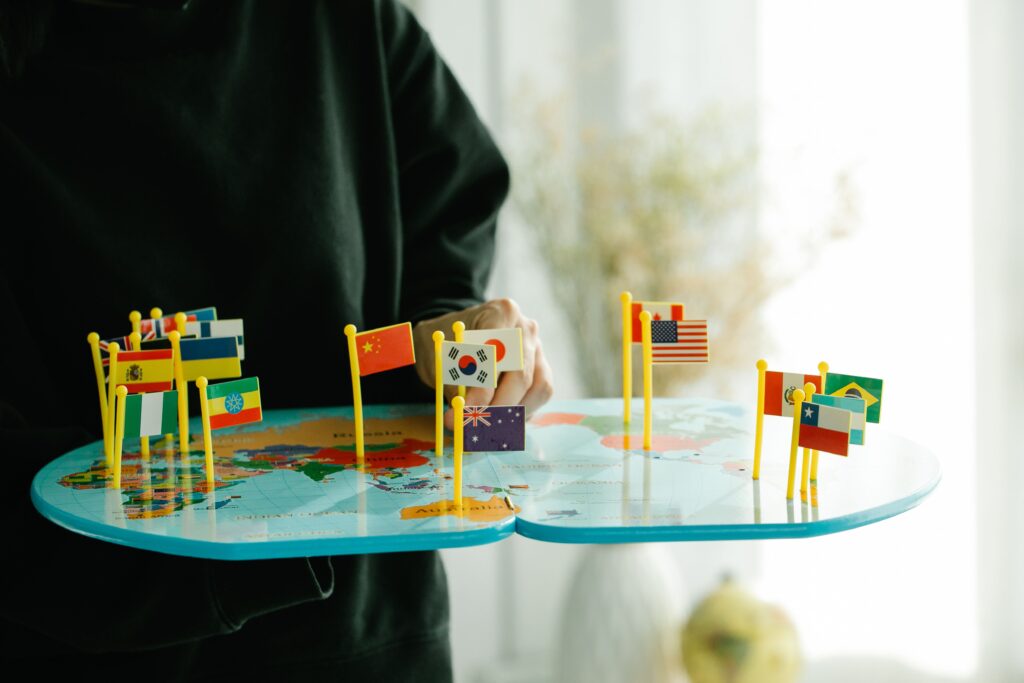
A multipolar world spreads power across three or more major players — think the United States, China, Russia, India, and the European Union, each with real leverage over global affairs.
2. From Unipolar Dominance To Multipolar Reality: A Short Timeline
A. 1991–2008: The Unipolar Peak
For decades after the Cold War, the United States anchored global trade, security, and finance almost alone. The dollar was the default currency, and Washington’s institutions — the IMF, the World Bank, NATO — set most of the rules everyone else played by.
This was the high point of unipolarity. Rivals existed, but none could yet match America’s combined military, economic, and cultural reach.
B. 2008–2020: Cracks Appear
The 2008 financial crisis, which started on Wall Street, dented faith in Western-led finance worldwide. Meanwhile, China turned itself from a manufacturing hub into a technological and financial heavyweight in barely a generation.
Its Belt and Road Initiative built ports, railways, and telecom networks across Asia, Africa, and Latin America. Countries that once looked only to Washington or Brussels for loans suddenly had a second — and sometimes preferred — option, and the first real cracks in the unipolar order began to show.
C. 2020–2026: Multipolarity Accelerates
A pandemic exposed fragile supply chains, and sanctions after 2022 pushed Russia hard into Asia, deepening ties with China and reshaping energy flows east. BRICS expansion, de-dollarization efforts, and new regional trade corridors all picked up speed in this window.
By 2026, the shift from a unipolar to a multipolar global system was no longer a theory in academic journals — it was showing up in summit communiqués, currency deals, and shipping routes.
D. Russia’s Pivot Toward Eurasia
Isolated from Western markets after 2022, Russia leaned harder into Asia. Energy exports shifted east, and diplomatic energy poured into groups like BRICS and the Shanghai Cooperation Organisation.
This pivot deepened a long-standing partnership with China, while pushing Moscow to court India, Iran, and Gulf states for trade and diplomatic cover.
Also Read – International Relations: The Ultimate Guide for 2026
3. Key Relationships Shaping The Multipolar World
Understanding a multipolar world means understanding how its biggest players actually relate to one another. These relationships are rarely simple friendships or rivalries — they’re usually both at once.
A. United States And China: Rivalry And Interdependence
Washington and Beijing compete fiercely over technology, trade, and influence in Asia. Tariffs, export controls on semiconductors, and naval patrols in the South China Sea all reflect that tension.
Yet the two economies remain deeply intertwined. American companies still rely on Chinese factories, and China still holds a large stock of US debt — a rivalry that neither side can fully walk away from.
B. Russia And China: An Alliance Of Convenience
Moscow and Beijing describe their partnership as having “no limits,” though in practice it has clear boundaries. China buys discounted Russian energy and gains a reliable partner against Western pressure.
Russia gets an economic lifeline and diplomatic backing at the UN. Neither is a formal military ally, but both benefit from a world where American influence is checked.
C. India’s Strategic Autonomy
India refuses to be boxed into any single camp. It buys Russian weapons and oil, while also joining the US-led Quad alongside Japan and Australia.
In 2026, India holds the BRICS presidency while also preparing to host a Quad summit — a balancing act few other nations could pull off. This is the clearest example of “strategic autonomy” in practice.
D. The European Union’s Search For Relevance
The EU built its postwar identity around alliance with Washington. Now it is being pushed to hedge, engaging BRICS economies for trade even as it stays tied to NATO for security.
Researchers at the Clingendael Institute, a leading European foreign-policy think tank, argue that BRICS expansion, combined with shifting US priorities, is accelerating this multipolar shift — pushing the EU to diversify its economic and strategic partnerships to stay relevant on the world stage. That’s a striking admission from Europe’s own policy circles.
E. The Rise Of The Global South And BRICS
BRICS began as an investment shorthand for Brazil, Russia, India, China, and South Africa. It has since become a political project.
Between 2025 and 2026, the bloc added Egypt, Ethiopia, Iran, the UAE, Saudi Arabia, and Indonesia, bringing total membership to eleven nations that together represent roughly 45 percent of the world’s population and around 35 percent of global GDP. That scale gives the Global South a louder voice in global finance and trade talks.
F. Middle Powers And Regional Blocs
Beyond the giants, “middle powers” like Turkey, Indonesia, Saudi Arabia, and Nigeria increasingly play both sides. They trade with everyone, join multiple blocs, and avoid picking permanent teams.
Regional groups — ASEAN, the African Union, Mercosur, the Gulf Cooperation Council — also gain weight as they negotiate collectively rather than country by country.
Also Read – Democrats vs Republicans: Key Differences Explained
4. Africa And Latin America In The Multipolar Age
A. Africa’s Growing Leverage
Africa is often left out of headline geopolitics, but it holds leverage few realize: critical minerals for batteries and chips, a young workforce, and a fast-growing consumer market. The African Continental Free Trade Area (AfCFTA) is stitching 54 countries into a single market, giving the continent more negotiating weight with outside powers.
China, the Gulf states, and increasingly India all compete for access to African cobalt, lithium, and infrastructure contracts. That competition, unlike the aid-dependent relationships of decades past, gives African governments genuine room to negotiate better terms.
B. Latin America’s Balancing Act
Brazil has positioned itself as a bridge between the Global South and the West, hosting the BRICS summit and pushing for reformed global institutions without cutting ties to Washington or Brussels. Mercosur’s long-stalled trade deal with the EU shows the same instinct — deepen ties with Europe while also courting China as a top trading partner.
Mexico, meanwhile, has become a major beneficiary of supply-chain “nearshoring,” as US companies shift manufacturing away from Asia and closer to home. In its own way, Latin America is learning to hedge just like India or Turkey.
5. Economic Dimensions Of Multipolarity
A. De-dollarization And New Financial Systems
A recurring theme across BRICS meetings is reducing reliance on the US dollar for trade and reserves. More deals are settled in local currencies or through swap arrangements.
The New Development Bank, set up by BRICS members, offers financing without the conditions typically attached by the IMF or World Bank. It’s a small but symbolic alternative to Western-led lending.
B. Trade Blocs And Supply Chain Realignment
Supply chains that once ran almost entirely through China are quietly diversifying into Vietnam, India, and Mexico. Companies call it “friend-shoring” or “de-risking,” but the underlying logic is the same: fewer eggs in one basket.
New trade corridors, from India-Middle East-Europe routes to expanded African free trade zones, are being built partly to reduce dependence on any single power.
6. Technology And The New Battlegrounds
Semiconductors, artificial intelligence, and rare earth minerals have become the new oil. Export controls on advanced chips are as consequential today as oil embargoes once were.
Nations are racing to build their own chip factories, AI models, and mineral supply chains, precisely because technological dependence has become a geopolitical vulnerability.
7. Challenges And Risks Of A Multipolar World
More power centers can mean more friction. Without one dominant referee, disputes over trade, territory, or sanctions can drag on longer, since no single institution can force a resolution.
Global cooperation on shared problems — climate change, pandemics, financial stability — also gets harder when major powers distrust one another’s institutions.
At the same time, a multipolar world isn’t automatically more dangerous. Many analysts argue it can distribute responsibility more fairly and give smaller nations more genuine choice, rather than forcing them to align with one bloc.
8. What This Means For The Future
Expect more countries to hedge rather than choose sides outright. Expect regional currencies, regional development banks, and regional security pacts to matter more than they used to.
Expect, too, that no single narrative — “the American century” or “the Chinese century” — will fully capture what’s coming. The 21st century increasingly belongs to a crowded table, not a single seat at its head.
9. My View: The Rise of a Multipolar World
In my view, the transition toward a multipolar world is neither entirely positive nor entirely negative. Its impact on global stability will depend largely on how major powers manage competition while preserving channels for cooperation. A world with multiple influential states has the potential to create a more balanced international system, but it also introduces new strategic challenges that cannot be ignored.
The most significant aspect of this transformation is the growing rivalry between the United States and China. Unlike the Cold War, today’s competition extends beyond military power to technology, trade, supply chains, artificial intelligence, and global influence. How these two powers handle their differences will shape international politics for decades. If competition remains within agreed rules, it can encourage innovation and economic growth. If it becomes increasingly confrontational, it could fuel regional conflicts and disrupt global markets.
One of the key benefits of a multipolar order is greater economic competition. When several major powers compete to attract investment, develop technology, and expand trade, countries around the world gain more opportunities to diversify their partnerships. At the same time, the United States should continue to strengthen its alliances, as strong partnerships remain essential for maintaining stability and deterring aggression. Alliances provide predictability in an increasingly uncertain global environment.
I also believe that artificial intelligence and emerging technologies will become the most important drivers of geopolitical influence. Nations that lead in AI, cybersecurity, advanced manufacturing, and digital infrastructure will possess significant strategic advantages. Future competition will therefore be determined not only by military strength but also by technological leadership and economic resilience.
Although I support stronger international cooperation on global challenges such as climate change, I think international organizations should not necessarily become more powerful in their current form. Instead, they should focus on improving coordination, encouraging dialogue, and adapting to changing geopolitical realities without undermining national sovereignty.
Looking ahead, I expect the world to experience continued rivalry combined with selective cooperation. Countries will compete in areas such as technology and security while still working together on issues that no nation can solve alone. This balance between competition and cooperation will define the success of a multipolar world. Ultimately, global stability will depend less on how many great powers exist and more on whether they choose responsible statecraft over confrontation. A multipolar world is therefore an opportunity, but only if it is managed with restraint, diplomacy, and long-term strategic thinking.
Read – BRICS and the Multipolar World
10. Frequently Asked Questions
What Does “multipolar World” Mean?
Is The World Already Multipolar?
What Is The Difference Between A Unipolar And A Multipolar World?
How Does BRICS Relate To The Multipolar World?
Which Countries Are Considered Poles In A Multipolar World?
How Does A Multipolar World Affect Global Trade?
Is A Multipolar World More Dangerous Than A Unipolar One?
What Role Does The US Still Play In A Multipolar World?
11. Conclusion
Power hasn’t vanished from the world; it has simply spread out. The old map, with one bright capital lighting up everything around it, is being redrawn with several glowing centers instead.
For everyday people, this isn’t just a headline about presidents and summits. It shapes the price of the fuel in your tank, the phone in your pocket, and the job market your kids will graduate into.
Maybe that’s the real story of the multipolar world: not who wins, but how so many different nations, cultures, and ambitions learn to share one increasingly small, increasingly connected planet. That’s a story still being written — and we’re all living inside its opening chapters.
What do you think ? Please Comment …
